
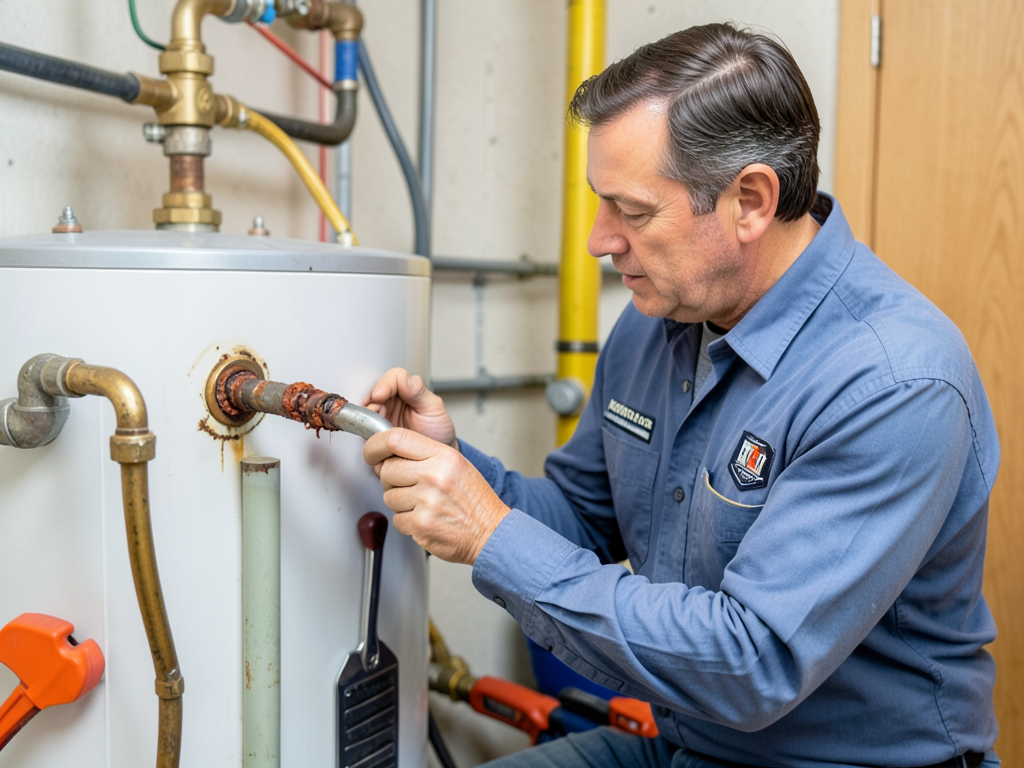
Why Your Anode Rod is the Secret to Making Your Water Heater Last in Knightdale
Your water heater works silently every day, but inside the tank a critical battle is happening. A small metal rod called the anode rod sacrifices itself to protect your entire water heater from corrosion. In Knightdale, where Wake County’s water quality and mineral content can vary, understanding this component is essential for homeowners who want to avoid the expense and inconvenience of premature water heater failure.. Read more about Why Your Home in 5401 North Might Need a Water Pressure Regulator Check.
The anode rod is essentially a “sacrificial lamb” for your water heater. It’s made from magnesium, aluminum, or zinc and is designed to corrode instead of your tank’s steel lining. Without this protection, your tank would rust from the inside out within just a few years. In Knightdale’s water conditions, which typically have moderate hardness levels, a properly functioning anode rod can extend your water heater’s life by five to ten years.
Wake County’s water, supplied by Raleigh’s Public Utilities Department, generally ranges from 3 to 7 grains per gallon of hardness. This is considered soft to moderately hard water, which is actually better for your anode rod than extremely hard water. However, Knightdale homes near the Neuse River watershed may experience slightly different mineral content than those in other parts of Wake County, affecting how quickly your anode rod depletes. EPA WaterSense Program.
The typical lifespan of an anode rod in Knightdale conditions is three to five years. After that, the rod becomes so corroded that it can no longer protect your tank effectively. Once the anode rod fails, your water heater’s tank begins to rust, leading to leaks, reduced efficiency, and eventually complete failure. Replacing a $30 anode rod is far less expensive than replacing an entire water heater, which can cost $1,200 to $2,500 installed.
Several signs indicate your anode rod needs replacement. If you notice rusty or discolored water coming from your hot water taps, this often means the rod has completely corroded away and your tank is beginning to rust. A rotten egg smell in your hot water, particularly common in Knightdale homes with well water or those near certain geological formations, indicates sulfur bacteria reacting with a failing magnesium rod. Popping or cracking sounds from your water heater suggest sediment buildup, which accelerates anode rod depletion. Signs You Need Sewer Repair.
Choosing the right anode rod material matters for Knightdale homes. Magnesium rods provide the best protection but deplete faster in areas with high sulfur content. Aluminum rods last longer but offer less protection. For Knightdale’s mixed water conditions, many plumbers recommend aluminum-zinc rods, which combine the longevity of aluminum with the sulfur-fighting properties of zinc. These rods are particularly effective for homes experiencing the “rotten egg” smell in their hot water. Who to Call for 24-7 Plumber Services in Wake Forest.
Replacing an anode rod requires specific tools and safety precautions. You’ll need a 1-1/16 inch deep socket, a breaker bar or impact wrench, Teflon tape, and possibly a helper to stabilize the water heater. The process involves shutting off power and water supply, draining several gallons from the tank, and carefully removing the old rod. In Knightdale, where many homes have water softeners, you may need to replace your anode rod more frequently, as soft water accelerates corrosion of the sacrificial metal. Professional Drain Cleaning Services in Cary to Stop Stubborn Backups.
Water softeners, common in Knightdale homes, create a unique challenge for anode rods. The ion exchange process that removes hardness minerals also makes the water more aggressive toward metal components. If you have a water softener, your anode rod may need replacement every two to three years instead of the typical three to five. Some Knightdale homeowners with water softeners opt for powered anode rods, which use electrical current instead of sacrificial metal to prevent corrosion.
Powered anode rods represent a permanent solution for many Knightdale homeowners. These rods, typically made of titanium with a stainless steel core, use a small electrical current to prevent corrosion without depleting over time. While the initial cost is higher ($100-$150 versus $30 for traditional rods), they never need replacement and work exceptionally well in softened water conditions common in Knightdale.
The replacement process itself can be challenging, especially in older Knightdale homes where water heaters may be installed in tight spaces. Anode rods are typically 40 to 50 inches long and must be inserted vertically into the tank. If your water heater is in a low-ceiling area or surrounded by cabinetry, you may need to use a flexible anode rod that can be bent during installation. This is a common scenario in Knightdale’s mix of older ranch homes and newer constructions. Safe Gas Line Installation and Repairs for Residents in Rolesville.
Professional replacement offers several advantages over DIY attempts. Licensed plumbers in Knightdale have specialized tools like impact wrenches that can break loose seized anode rods without damaging your water heater. They can also inspect your entire system, checking for sediment buildup, proper temperature settings, and signs of developing problems. The typical professional replacement cost in Knightdale ranges from $150 to $300, which includes labor, the new rod, and a basic system inspection.
According to the North Carolina Plumbing Code Section 13-4.6, water heater installations and major maintenance must comply with specific safety standards. While anode rod replacement is generally considered maintenance rather than installation, professional plumbers ensure all work meets local code requirements. This is particularly important in Knightdale, where many homes are part of planned communities with specific plumbing standards.
Emergency situations can arise during DIY anode rod replacement. If your rod is severely corroded or “frozen” in place, you may snap your wrench or damage the water heater’s threads. This can lead to water leaks or complete system failure. Knightdale homeowners who encounter these issues should call a professional immediately rather than attempting further repairs, as water damage can spread quickly and cause thousands of dollars in damage. Toilet Repair & Installation.
The environmental impact of proper anode rod maintenance extends beyond your wallet. A water heater with a functioning anode rod operates more efficiently, using less energy to heat water. This reduces your carbon footprint and lowers utility bills. Additionally, preventing premature water heater failure reduces landfill waste from discarded units. In Knightdale’s growing community, where water conservation and environmental responsibility are increasingly important, this maintenance step contributes to broader sustainability efforts.
Timing your anode rod replacement can be strategic. Many Knightdale homeowners schedule this maintenance during spring or fall when HVAC contractors are less busy, potentially getting better service rates. Additionally, checking your anode rod during these shoulder seasons means your water heater will be in optimal condition before summer’s high hot water demand or winter’s cold incoming water temperatures, which can stress the system.
For Knightdale’s older homes, particularly those built before 2000, anode rod replacement may reveal other plumbing issues. Galvanized pipes common in these homes can contribute to sediment that accelerates anode rod depletion. During replacement, a professional can assess your entire hot water system and recommend additional maintenance or upgrades that could extend your plumbing system’s life by decades. ASSE International.
Multi-family properties and larger Knightdale homes with multiple bathrooms may benefit from more frequent anode rod inspections. The increased hot water demand in these homes means the anode rod works harder and depletes faster. Property managers in Knightdale’s apartment complexes often implement annual anode rod inspections as part of their preventive maintenance programs, reducing emergency service calls and extending equipment life.
The cost-benefit analysis strongly favors proactive anode rod replacement. A $30 rod and two hours of DIY time, or $200 for professional service, pales in comparison to the $1,200+ cost of emergency water heater replacement. More importantly, preventing a tank failure means avoiding water damage to your Knightdale home, which can easily cost thousands in repairs if a 40 or 50-gallon tank ruptures while you’re away.
Modern water heaters often include inspection ports or easily accessible anode rod locations, making DIY replacement more feasible for handy homeowners. However, even with these improvements, the process requires strength, proper tools, and knowledge of your specific water heater model. Knightdale residents should consult their water heater’s manual or a professional before attempting replacement, especially if their unit is under warranty.
The impact of Knightdale’s climate on water heater maintenance is often overlooked. Our hot, humid summers can increase bacterial growth in water heaters, while occasional winter freezes can cause thermal stress on tank components. These factors, combined with the moderate mineral content in our water, create conditions where anode rod maintenance becomes even more critical for system longevity.
Understanding your water heater’s age helps determine anode rod replacement timing. Most standard tank water heaters last 8 to 12 years. If your unit is approaching this age and you’ve never replaced the anode rod, immediate inspection is warranted. Many Knightdale homes have water heaters that are original to the house, meaning they could be 15 to 20 years old and operating with completely depleted protection.
The peace of mind that comes with proper water heater maintenance cannot be overstated. Knowing your system is protected means you won’t wake up to cold showers, won’t face emergency replacement costs, and won’t risk water damage to your Knightdale home. This simple maintenance step, performed every few years, protects one of your home’s most essential systems.
For Knightdale homeowners who prefer professional service, local plumbers understand our specific water conditions and can recommend the optimal anode rod type and replacement schedule. They can also identify other potential issues during the service visit, such as sediment buildup that might require flushing or signs of developing leaks that could be addressed before causing major damage.. Read more about A Homeowner’s Guide to Flushing Your Tankless Water Heater in North Hills.
Whether you choose DIY or professional replacement, the key is not ignoring this critical maintenance task. Your water heater works tirelessly to provide hot water for showers, laundry, and dishes. Protecting it with a fresh anode rod every few years is one of the most cost-effective home maintenance steps you can take. In Knightdale’s specific water conditions, this simple action can mean the difference between a water heater that lasts 8 years versus one that reliably serves your home for 15 years or more.
Comparison of Anode Rod Materials for Knightdale Homes
| Material | Lifespan in Knightdale Water | Best For | Cost | Sulfur Odor Control |
|---|---|---|---|---|
| Magnesium | 2-3 years | Standard water, maximum protection | $25-30 | Poor |
| Aluminum | 4-5 years | Hard water, longer replacement intervals | $20-25 | Fair |
| Aluminum/Zinc | 3-4 years | Homes with sulfur smell issues | $30-35 | Excellent |
| Powered (Titanium) | Lifetime | Water softeners, permanent solution | $100-150 | Excellent |
Water Heater Maintenance Schedule for Knightdale Homes
- Every 6 months: Check for leaks around the base of the water heater and test the temperature-pressure relief valve.
- Annually: Flush the tank to remove sediment buildup, which is common in Knightdale’s water.
- Every 2-3 years: Inspect the anode rod if you have a water softener or notice any performance issues.
- Every 3-5 years: Replace the anode rod as preventive maintenance, even if it appears partially intact.
- Every 8-12 years: Consider full water heater replacement, especially if the unit is original to an older Knightdale home.
Frequently Asked Questions
How do I know if my anode rod needs replacement?
Signs include rusty or discolored hot water, a rotten egg smell from hot taps, popping sounds from the tank, or if your water heater is over 5 years old and you’ve never checked the rod. You can also inspect it directly by turning off power and water, then removing the hex head on top of the tank.
Can I replace the anode rod myself?
Yes, if you’re comfortable with basic plumbing and have the right tools (1-1/16 inch socket, breaker bar, Teflon tape). However, if the rod is seized or your water heater is in a tight space, professional help may be needed to avoid damaging the unit.
Does a water softener affect my anode rod?
Yes, water softeners make water more aggressive toward metal components, causing anode rods to deplete faster. If you have a water softener in Knightdale, you may need to replace your anode rod every 2-3 years instead of the typical 3-5 years.
What happens if I don’t replace the anode rod?
Without a functioning anode rod, your water heater tank will begin to rust from the inside. This leads to leaks, reduced efficiency, and eventual complete failure. The cost of emergency replacement and potential water damage far exceeds the price of preventive maintenance.
Is a powered anode rod worth the extra cost?
For Knightdale homes with water softeners or persistent sulfur odor issues, powered anode rods are often worth the investment. They never need replacement and provide consistent protection, though the upfront cost is $100-150 versus $30 for traditional rods.
- Turn Off Power and Water
Shut off electricity to the water heater at the breaker and close the cold water supply valve.
- Drain the Tank
Connect a garden hose to the drain valve and drain 3-5 gallons to reduce water pressure above the anode rod.
- Remove the Old Rod
Use a 1-1/16 inch socket and breaker bar to unscrew the hex head on top of the tank. Have a helper hold the tank steady if needed.
- Install the New Rod
Wrap the threads of the new rod with Teflon tape and carefully insert it into the tank, tightening securely but not over-tightening.
- Refill and Restore Power
Close the drain valve, open the cold water supply, and restore power once the tank is full and air is purged from the system.
Protecting your water heater with proper anode rod maintenance is one of the smartest investments you can make as a Knightdale homeowner. This simple component works tirelessly to prevent corrosion and extend your system’s life by years or even decades. Whether you choose DIY replacement or professional service, staying on top of this maintenance can save you thousands in emergency repairs and replacements.
Don’t wait until you have rusty water or cold showers to think about your anode rod. If your Knightdale home’s water heater is over three years old or you’ve noticed any of the warning signs mentioned above, it’s time for an inspection. Pick up the phone and call (984) 294-6422 today to schedule your water heater inspection. Our experienced technicians understand Knightdale’s specific water conditions and can recommend the right anode rod solution for your home. Protect your investment and ensure reliable hot water for years to come.
{
“@context”: “https://schema.org”,
“@type”: “BlogPosting”,
“headline”: “Why Your Anode Rod is the Secret to Making Your Water Heater Last in Knightdale”,
“description”: “Discover how the anode rod protects your water heater in Knightdale’s water conditions and learn when to replace it to avoid costly tank failure.”,
“wordCount”: 2404,
“datePublished”: “2026-05-17T07:02:00.000Z”,
“dateModified”: “2026-05-17T07:02:00.000Z”,
“inLanguage”: “en-US”,
“mainEntityOfPage”: {
“@type”: “WebPage”,
“@id”: “https://ironwoodplumbingraleigh.com”
},
“publisher”: {
“@type”: “LocalBusiness”,
“name”: “Ironwood Plumbing Raleigh”,
“url”: “https://ironwoodplumbingraleigh.com”
},
“author”: {
“@type”: “Organization”,
“name”: “Ironwood Plumbing Raleigh”,
“url”: “https://ironwoodplumbingraleigh.com”
},
“image”: {
“@type”: “ImageObject”,
“url”: “https://ironwoodplumbingraleigh.com/wp-content/uploads/2026/03/why-your-anode-rod-is-the-secret-to-making-your-wa-1.png”
}
}
{
“@context”: “https://schema.org”,
“@type”: “Plumber”,
“name”: “Ironwood Plumbing Raleigh”,
“url”: “https://ironwoodplumbingraleigh.com”,
“address”: {
“@type”: “PostalAddress”,
“addressLocality”: “Raleigh”
},
“areaServed”: {
“@type”: “City”,
“name”: “Raleigh”
}
}
{
“@context”: “https://schema.org”,
“@type”: “FAQPage”,
“mainEntity”: [
{
“@type”: “Question”,
“name”: “How do I know if my anode rod needs replacement?”,
“acceptedAnswer”: {
“@type”: “Answer”,
“text”: “Signs include rusty or discolored hot water, a rotten egg smell from hot taps, popping sounds from the tank, or if your water heater is over 5 years old and you’ve never checked the rod. You can also inspect it directly by turning off power and water, then removing the hex head on top of the tank.”
}
},
{
“@type”: “Question”,
“name”: “Can I replace the anode rod myself?”,
“acceptedAnswer”: {
“@type”: “Answer”,
“text”: “Yes, if you’re comfortable with basic plumbing and have the right tools (1-1/16 inch socket, breaker bar, Teflon tape). However, if the rod is seized or your water heater is in a tight space, professional help may be needed to avoid damaging the unit.”
}
},
{
“@type”: “Question”,
“name”: “Does a water softener affect my anode rod?”,
“acceptedAnswer”: {
“@type”: “Answer”,
“text”: “Yes, water softeners make water more aggressive toward metal components, causing anode rods to deplete faster. If you have a water softener in Knightdale, you may need to replace your anode rod every 2-3 years instead of the typical 3-5 years.”
}
},
{
“@type”: “Question”,
“name”: “What happens if I don’t replace the anode rod?”,
“acceptedAnswer”: {
“@type”: “Answer”,
“text”: “Without a functioning anode rod, your water heater tank will begin to rust from the inside. This leads to leaks, reduced efficiency, and eventual complete failure. The cost of emergency replacement and potential water damage far exceeds the price of preventive maintenance.”
}
},
{
“@type”: “Question”,
“name”: “Is a powered anode rod worth the extra cost?”,
“acceptedAnswer”: {
“@type”: “Answer”,
“text”: “For Knightdale homes with water softeners or persistent sulfur odor issues, powered anode rods are often worth the investment. They never need replacement and provide consistent protection, though the upfront cost is $100-150 versus $30 for traditional rods.”
}
}
]
}
{
“@context”: “https://schema.org”,
“@type”: “HowTo”,
“name”: “How to Replace Your Water Heater Anode Rod”,
“step”: [
{
“@type”: “HowToStep”,
“position”: 1,
“name”: “Turn Off Power and Water”,
“text”: “Shut off electricity to the water heater at the breaker and close the cold water supply valve.”
},
{
“@type”: “HowToStep”,
“position”: 2,
“name”: “Drain the Tank”,
“text”: “Connect a garden hose to the drain valve and drain 3-5 gallons to reduce water pressure above the anode rod.”
},
{
“@type”: “HowToStep”,
“position”: 3,
“name”: “Remove the Old Rod”,
“text”: “Use a 1-1/16 inch socket and breaker bar to unscrew the hex head on top of the tank. Have a helper hold the tank steady if needed.”
},
{
“@type”: “HowToStep”,
“position”: 4,
“name”: “Install the New Rod”,
“text”: “Wrap the threads of the new rod with Teflon tape and carefully insert it into the tank, tightening securely but not over-tightening.”
},
{
“@type”: “HowToStep”,
“position”: 5,
“name”: “Refill and Restore Power”,
“text”: “Close the drain valve, open the cold water supply, and restore power once the tank is full and air is purged from the system.”
}
],
“image”: “https://ironwoodplumbingraleigh.com/wp-content/uploads/2026/03/why-your-anode-rod-is-the-secret-to-making-your-wa-1.png”
}
{
“@context”: “https://schema.org”,
“@type”: “BreadcrumbList”,
“itemListElement”: [
{
“@type”: “ListItem”,
“position”: 1,
“name”: “Home”,
“item”: “https://ironwoodplumbingraleigh.com”
},
{
“@type”: “ListItem”,
“position”: 2,
“name”: “Blog”,
“item”: “https://ironwoodplumbingraleigh.com/blog”
},
{
“@type”: “ListItem”,
“position”: 3,
“name”: “Why Your Anode Rod is the Secret to Making Your Water Heater Last in Knightdale”
}
]
}
{
“@context”: “https://schema.org”,
“@type”: “Service”,
“serviceType”: “Plumbing”,
“provider”: {
“@type”: “LocalBusiness”,
“name”: “Ironwood Plumbing Raleigh”,
“url”: “https://ironwoodplumbingraleigh.com”
},
“areaServed”: {
“@type”: “City”,
“name”: “Raleigh”
},
“description”: “Discover how the anode rod protects your water heater in Knightdale’s water conditions and learn when to replace it to avoid costly tank failure.”
}