



Menu

Commercial Sewer Line Repair in Raleigh – Minimize Downtime and Keep Your Business Operating

Fast-tracked commercial sewer main repair and business sewer line repair services engineered to restore full capacity with minimal disruption to your operations in Raleigh's high-traffic commercial zones.

Slider Image 1
Slider Image 2
Slider Image 3
Slider Image 4
Slider Image 5
Slider Image 7
Slider Image 8
Slider Image 9
Slider Image 10
Slider Image 11

Why Raleigh Commercial Properties Face Persistent Sewer Line Failures

Raleigh's clay-heavy soil composition creates persistent challenges for commercial sewer systems. The expansive clay shifts during wet and dry cycles, placing lateral stress on underground sewer mains and causing joint separation, bellying, and complete line collapse. Add high wastewater volumes from multi-tenant buildings, restaurants, and industrial facilities, and you accelerate wear on aging cast iron and clay pipes installed decades ago.

Commercial properties in downtown Raleigh and the Research Triangle Park corridor deal with compounded risk. Heavy truck traffic vibrates aging infrastructure. Root infiltration from mature oak and pine trees common to the area penetrates compromised joints. When a commercial sewer pipe fails, you face health code violations, interrupted operations, and potential environmental liability.

The problem becomes urgent when multiple fixtures back up simultaneously, raw sewage surfaces in parking areas, or inspection cameras reveal imminent collapse. These are not maintenance issues you can defer. Business sewer line repair requires immediate action to prevent regulatory penalties and revenue loss.

Industrial facilities processing wastewater with grease, chemicals, or solids face accelerated deterioration. Standard residential repair methods do not address the capacity demands or code compliance requirements of commercial sewer systems. You need industrial sewer line repair that accounts for flow rates, permits, and the operational realities of keeping a business functional during excavation and restoration work.

Why Raleigh Commercial Properties Face Persistent Sewer Line Failures
How We Execute Commercial Sewer Repair Without Shutting Down Your Business

How We Execute Commercial Sewer Repair Without Shutting Down Your Business

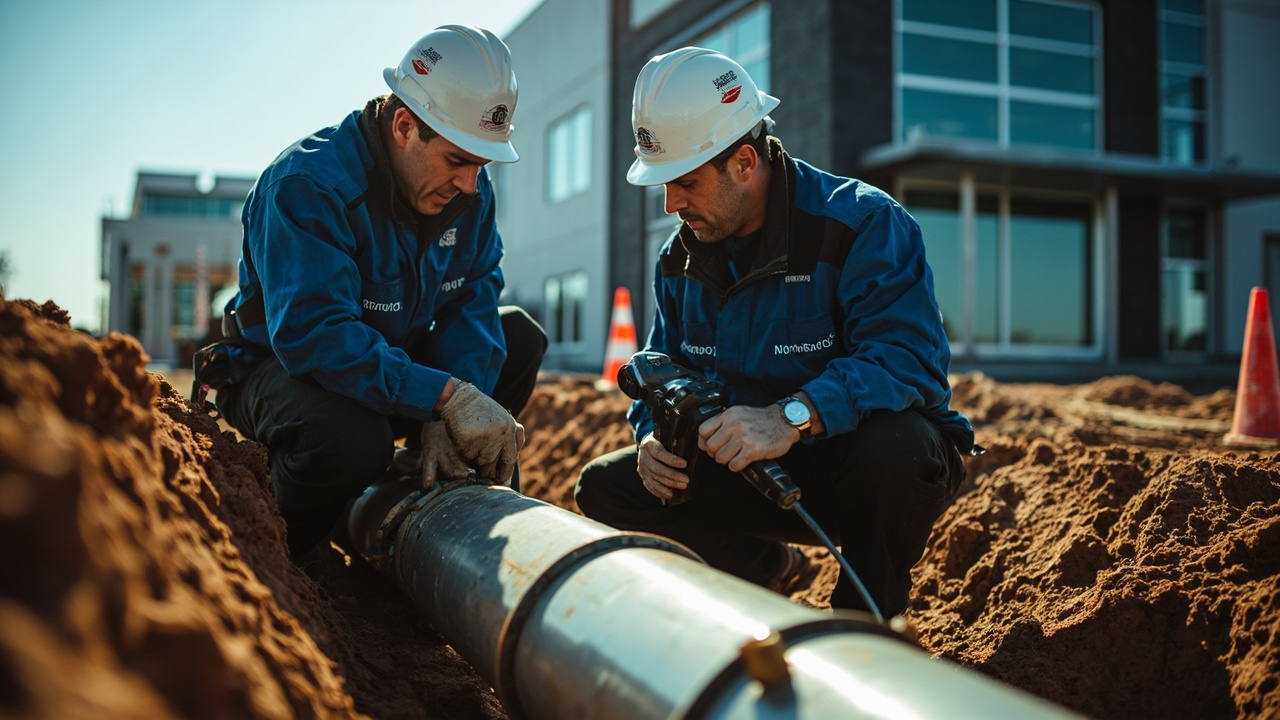
Commercial sewer repair services demand precision planning before the first shovel hits dirt. We deploy high-definition sewer cameras to map the exact failure location, pipe material, depth, and proximity to utilities. This diagnostic phase eliminates guesswork and prevents cost overruns caused by exploratory digging.

When trenchless repair is viable, we use pipe bursting or cured-in-place pipe lining to rehabilitate the sewer main without excavating your parking lot or disrupting customer access. Pipe bursting fractures the old line while simultaneously pulling new HDPE pipe into place. CIPP lining creates a seamless epoxy pipe inside the existing host pipe, restoring structural integrity and flow capacity in hours instead of days.

If excavation is required due to complete collapse or code mandates, we coordinate with the City of Raleigh's permitting office to expedite approvals. We stage equipment during off-peak hours, use trench boxes for safety compliance, and backfill with engineered materials that prevent future settling. For properties in historic districts or near protected waterways, we follow erosion control protocols and coordinate inspections to avoid project delays.

We size replacement pipes to handle your actual usage patterns. A multi-tenant office building requires different specifications than a food processing facility. We calculate fixture units, peak flow rates, and future expansion needs to ensure the new commercial sewer main meets current and projected demand. Temporary bypass pumping keeps wastewater flowing while we complete below-grade work, so your tenants and customers experience zero service interruption.

What Happens During Your Commercial Sewer Line Repair Project

Commercial Sewer Line Repair in Raleigh – Minimize Downtime and Keep Your Business Operating
01

Emergency Assessment and Containment

We arrive on-site with camera trucks and locating equipment to identify the failure point and assess contamination risk. If sewage is surfacing, we establish containment barriers and coordinate with environmental health officials. We provide documentation for your insurance claim and outline repair options with transparent cost factors. You receive a scope of work within hours, not days.
02

Coordinated Repair Execution

Our crew secures permits, notifies adjacent property owners, and marks underground utilities through NC811. We install bypass pumping if needed and execute the repair using trenchless methods or controlled excavation. All work adheres to North Carolina Plumbing Code Chapter 7 for commercial waste systems. We coordinate inspections with city officials to maintain compliance and avoid delays that extend your business disruption.
03

Testing and Operational Handoff

Before backfilling, we perform pressure testing or water testing to verify the new sewer main meets code standards for leak-free operation. We provide video documentation of the completed repair and submit final inspection reports to the city. You receive as-built drawings showing the new pipe location, depth, and material specifications for your facility records and future maintenance planning.

Why Raleigh Commercial Property Managers Choose Ironwood Plumbing

Commercial sewer failures create liability exposure that residential plumbers are not equipped to manage. We carry commercial general liability coverage and pollution liability insurance specific to underground utility work. When sewage impacts neighboring properties or enters storm drains, you need a contractor with the financial backing and expertise to handle environmental remediation and regulatory compliance.

We work within Raleigh's municipal code requirements for commercial properties, including backflow prevention mandates and grease interceptor regulations that apply to food service establishments. Our team coordinates with the City of Raleigh Public Utilities Department and understands the permit timelines for work in public rights-of-way versus private laterals.

Ironwood Plumbing Raleigh maintains relationships with local civil engineers and can expedite stamped drawings when your project requires engineered plans for deep excavations or work near structures. We have completed commercial sewer projects in the Warehouse District, the medical corridor near WakeMed, and industrial parks along I-40, so we understand the site logistics and access constraints unique to Raleigh's commercial zones.

Our equipment inventory includes vacuum excavators for safe digging near fiber optic lines and pressurized gas mains, which are dense in Raleigh's urban core. We own bypass pumping systems rated for high-volume commercial applications, so we do not need to rent equipment that delays mobilization. When your business cannot afford downtime, you need a contractor with the resources to respond immediately and execute complex repairs without waiting on subcontractors or specialty equipment.

What to Expect During Your Commercial Sewer Line Repair

Response Time and Project Duration

We dispatch within two hours for commercial emergencies affecting business operations. Camera inspection and failure assessment typically complete within four hours of arrival. Trenchless repairs finish in one to two days depending on access and pipe length. Excavation projects requiring permits and engineered backfill take three to five days, but we maintain operational bypass systems throughout. We schedule work during your lowest traffic periods to minimize customer and tenant disruption.

Diagnostic Process and Repair Recommendations

Our initial assessment includes high-definition video inspection with distance markers and GPS coordinates. We map the sewer lateral from your building to the municipal main, identifying bellies, root intrusion, corrosion, and structural defects. You receive a written report with video stills showing the failure points and a comparison of repair methods. We outline trenchless options versus open-cut excavation, explaining the trade-offs in cost, timeline, and long-term durability specific to your pipe material and soil conditions.

Final Deliverables and System Performance

Completed repairs undergo pressure testing or water testing per North Carolina Plumbing Code standards. You receive certified test results, final inspection approvals from the City of Raleigh, and video documentation of the new pipe installation. We restore surface conditions to match existing pavement or landscaping. For CIPP lining projects, the cured epoxy pipe provides a smooth interior surface that improves flow rates and resists future root intrusion. All work includes detailed as-built documentation for your facility maintenance records.

Post-Repair Support and Maintenance Planning

We provide operational guidance for maintaining your commercial sewer system, including recommended inspection intervals based on your wastewater characteristics. For restaurants and food service facilities, we outline grease trap pumping schedules that prevent buildup in the main line. Industrial clients receive customized maintenance protocols for chemical waste or high-solids discharge. We offer annual camera inspections to catch developing issues before they escalate into emergency failures, allowing you to budget repairs during planned downtime instead of reacting to catastrophic breaks.

Frequently Asked Questions

You Have Questions,
We Have Answers

Will insurance pay for sewer line replacement? +

Commercial insurance typically does not cover sewer line replacement unless the damage results from a sudden, covered peril like a burst pipe from freezing. Most policies exclude gradual deterioration, tree root intrusion, or maintenance failures. Review your property policy to confirm coverage limits and exclusions. In Raleigh, clay soil shifts and aging infrastructure often cause slow degradation, which insurers deny. If wastewater backup damages your building interior, some policies provide limited coverage. Document all damage immediately and file claims promptly. Consult your insurance adjuster and a licensed contractor to determine liability and potential reimbursement before authorizing repairs.

Who is responsible for a broken sewer pipe? +

Responsibility depends on where the break occurs. Commercial property owners typically own and maintain the lateral line from the building to the municipal connection point at the property line or right-of-way. The City of Raleigh maintains the main sewer line in the street. If the break occurs within your property boundaries, you pay for repairs. If roots from city trees invade your lateral or the main line fails, liability becomes negotiable. Review your deed, easements, and municipal codes to confirm boundaries. Always request a camera inspection to pinpoint the exact failure location before accepting repair responsibility.

What is the average cost of pipe relining? +

Pipe relining costs vary based on line diameter, length, access points, and damage severity. Commercial projects typically range higher than residential due to larger pipes and operational downtime considerations. In Raleigh, costs fluctuate depending on soil conditions, permit requirements, and whether the work disrupts business operations. Relining avoids excavation, reducing labor and restoration expenses. Factors include pipe material, extent of deterioration, and whether structural repairs precede lining installation. Request detailed estimates from licensed contractors who perform camera inspections first. Compare relining costs against full replacement to determine the most cost-effective solution for your specific situation.

How to fix a collapsed sewer line without digging? +

Trenchless methods repair collapsed lines without extensive digging. Pipe bursting fractures the old pipe while simultaneously pulling new pipe through the same path. Cured-in-place pipe lining inserts an epoxy-saturated liner that hardens inside the existing pipe, creating a new structural wall. Both methods require access points at each end but eliminate the need to excavate the entire line. In Raleigh, trenchless repair preserves landscaping, parking lots, and building foundations. These methods work best when the collapse is partial and surrounding soil remains stable. Severe collapses may still require excavation to remove debris and stabilize surrounding ground.

Who pays for a collapsed sewer line? +

The property owner whose lateral line collapsed pays for repairs unless the damage stems from municipal main line failure or city tree roots. Commercial property owners maintain responsibility for all piping from the building to the connection point at the street or easement boundary. If the City of Raleigh sewer main backs up and causes your lateral to fail, the city may share liability. Review your property survey and municipal codes to confirm boundaries. Document the failure location with camera inspection footage. If liability is disputed, consult an attorney before authorizing repairs to preserve potential recovery options against responsible parties.

What is the average lifespan of a sewer line? +

Sewer line lifespan depends on material, installation quality, soil conditions, and maintenance. Cast iron pipes last 50 to 75 years but corrode faster in Raleigh's acidic clay soils. Clay pipes last 50 to 60 years but crack under shifting ground pressure. PVC pipes last 100 years or more when properly installed. Orangeburg pipes, common in older Raleigh commercial buildings, fail within 30 to 50 years. Tree root intrusion, ground settlement, and heavy traffic loads accelerate deterioration. Regular camera inspections identify early wear before catastrophic failure. Replace aging lines proactively to avoid emergency repairs and business interruption costs.

Who is liable for paying to repair the damaged line? +

Liability follows property boundaries and pipe ownership. Commercial property owners pay for lateral line repairs from the building to the municipal connection point. If a tenant causes the damage through negligence or misuse, lease terms may shift repair costs to the tenant. If city infrastructure fails or tree roots from public property invade your line, the City of Raleigh may share liability. Third-party contractors who damage lines during excavation carry liability insurance. Review lease agreements, property surveys, and municipal codes to determine responsibility. Document all damage with camera inspections and photographs to establish causation before assigning repair costs.

How to fix a broken main sewer line? +

Repairing a broken main sewer line requires immediate action to prevent wastewater backup and business closure. First, stop water use to minimize discharge. Contact a licensed contractor for emergency camera inspection to locate the break and assess damage severity. Repair options include spot repair for isolated cracks, pipe relining for widespread deterioration, or full replacement for catastrophic failure. In Raleigh, permits are required for excavation near roadways or easements. Coordinate with the City of Raleigh if the break affects municipal mains. Schedule repairs during low-occupancy hours to minimize operational disruption and liability exposure from unsanitary conditions.

Is it cheaper to replace or repair pipes? +

Repair costs less for isolated damage in otherwise sound pipes. Spot repairs or sectional replacement address localized cracks, joint failures, or root intrusion without replacing the entire line. Full replacement makes financial sense when pipes show widespread corrosion, multiple failure points, or obsolete materials like Orangeburg. In Raleigh commercial properties, consider operational downtime costs and future failure risk. Replacing aging lines eliminates recurring repair expenses and prevents emergency closures. Evaluate pipe age, material, and inspection findings. A 40-year-old cast iron line with multiple repairs warrants replacement. A 10-year-old PVC line with one crack needs only spot repair.

What is the cheapest way to replace a sewer line? +

The cheapest sewer line replacement method balances material costs, labor, and site restoration. Trenchless pipe bursting reduces excavation and surface restoration expenses compared to open-cut trenching. Using PVC pipe instead of cast iron lowers material costs without sacrificing longevity. Scheduling work during off-peak business hours avoids revenue loss from closures. In Raleigh, securing permits early prevents delay fees. Combining sewer line replacement with planned parking lot resurfacing or landscaping projects shares mobilization costs. The absolute lowest cost often comes from delaying replacement until catastrophic failure, but emergency repairs cost three times more and risk code violations, health hazards, and business interruption losses.

How Raleigh's Aging Infrastructure and Clay Soil Amplify Commercial Sewer Risks

Commercial buildings in downtown Raleigh and older business districts often sit on sewer mains installed in the 1960s and 1970s using clay tile or cast iron. These materials degrade faster in Raleigh's clay soil, which expands during heavy spring rains and contracts during summer droughts. The constant ground movement separates pipe joints and creates misalignment that traps solids and accelerates blockages. Properties near Crabtree Creek or the Neuse River floodplain face additional risk from seasonal water table fluctuations that saturate soil and destabilize pipe bedding.

Ironwood Plumbing Raleigh works directly with the city's inspection division and understands the permitting requirements for commercial projects in public easements. We know which streets require traffic control plans and which projects trigger NCDOT involvement due to proximity to state-maintained roads. Our familiarity with local engineering firms and environmental consultants speeds approvals when your project requires soil boring reports or dewatering permits. Choosing a contractor with established relationships in Raleigh's regulatory environment prevents delays that extend your repair timeline and operational disruption.

Plumbing Services in The Raleigh Area

We are proud to serve the entire Raleigh community and surrounding areas, bringing our trusted plumbing services directly to your doorstep. You can find our main office location on the map below. We are committed to providing fast response times and expert service, no matter where you are located within our service area. If you're unsure if we service your neighborhood, simply give us a call!

Address:
Ironwood Plumbing Raleigh, 4108 Atlantic Ave, Raleigh, NC, 27604

Additional Services We Offer

Our news updates

Latest Articles & News from The Blogs

Essential Tips for Maintaining Your Garbage Disposal During the Busy Holiday Season in Cary Your garbage disposal works hard year-round…

Essential Tips for Maintaining Your Garbage Disposal During the Busy Holiday Season in Cary

Essential Tips for Maintaining Your Garbage Disposal During the Busy Holiday Season in Cary Your garbage disposal works hard year-round…

Why Your Fridge Water Filter Might Be Slowing Down the Flow to Your Ice Maker

Why Your Fridge Water Filter Might Be Slowing Down the Flow to Your Ice Maker\n\nYour fridge is running slow and…

Designing a Laundry Room for Multi-Generational Living in Your Rolesville Property

Designing a Laundry Room for Multi-Generational Living in Your Rolesville Property Multi-generational living in Rolesville means creating spaces that work…

Contact Us

Do not wait for a complete system failure. Call Ironwood Plumbing Raleigh at (984) 294-6422 for immediate commercial sewer assessment. We provide transparent pricing, fast permitting, and repair execution designed to keep your business operational.