


Menu

Commercial Toilet & Urinal Repair in Raleigh | Same-Day Service to Keep Your Business Running

Industrial-grade restroom fixture repair that minimizes downtime and eliminates liability risks for Raleigh commercial properties, from office buildings to manufacturing facilities.

Slider Image 1
Slider Image 2
Slider Image 3
Slider Image 4
Slider Image 5
Slider Image 7
Slider Image 8
Slider Image 9
Slider Image 10
Slider Image 11

Restroom Failures Cost You Money Every Hour

A broken toilet or malfunctioning urinal in your Raleigh facility triggers a cascade of problems. Employee productivity drops when workers leave the building to find functioning restrooms. Customers notice immediately. Health code violations accumulate. Water damage spreads through subflooring and into the spaces below.

Raleigh's municipal water pressure fluctuates throughout the day as downtown office buildings, Research Triangle Park facilities, and North Hills commercial centers cycle through peak usage. These pressure swings stress flushometer valves and flush mechanisms, accelerating wear on industrial toilet components.

Commercial restroom fixture repair addresses failures in high-traffic environments where residential-grade parts fail within weeks. Your property needs flushometer repair that accounts for 200-plus daily activations per fixture. Commercial urinal maintenance prevents the calcium buildup that Raleigh's moderately hard water accelerates in sensor-based flush systems.

When a bathroom goes offline in your warehouse near I-440 or your restaurant in Crabtree Valley, you need commercial flush valve replacement executed without shutting down operations. The facilities team cannot afford to wait three days for parts or schedule repairs during a narrow maintenance window.

Industrial toilet repair services handle the larger-diameter waste lines, commercial-grade fill valves, and pressure-assist mechanisms that separate commercial fixtures from residential units. The repair approach differs completely because the usage volume, code requirements, and fixture specifications operate at a different scale.

Restroom Failures Cost You Money Every Hour
How We Execute Commercial Restroom Repairs

How We Execute Commercial Restroom Repairs

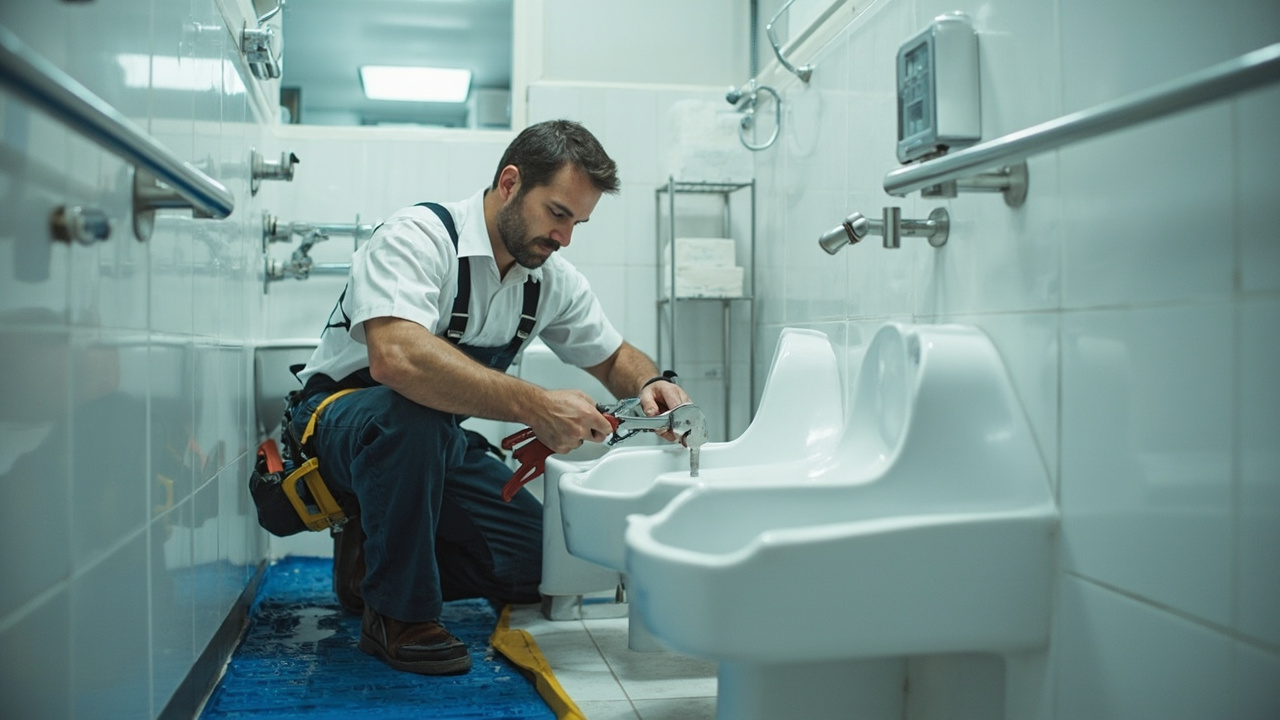
We dispatch technicians with commercial-specific parts inventory already loaded. Your service call does not require multiple trips to acquire the correct vacuum breaker, diaphragm kit, or sensor assembly. The van carries Sloan, Zurn, and American Standard commercial components sized for your fixture model.

Our diagnostic protocol identifies root causes, not symptoms. A running toilet in a commercial setting rarely indicates a simple flapper problem. We check water pressure at the supply line, measure flush volume against ICC code requirements, inspect the flush valve seat for calcium scoring, and verify sensor calibration on automatic units.

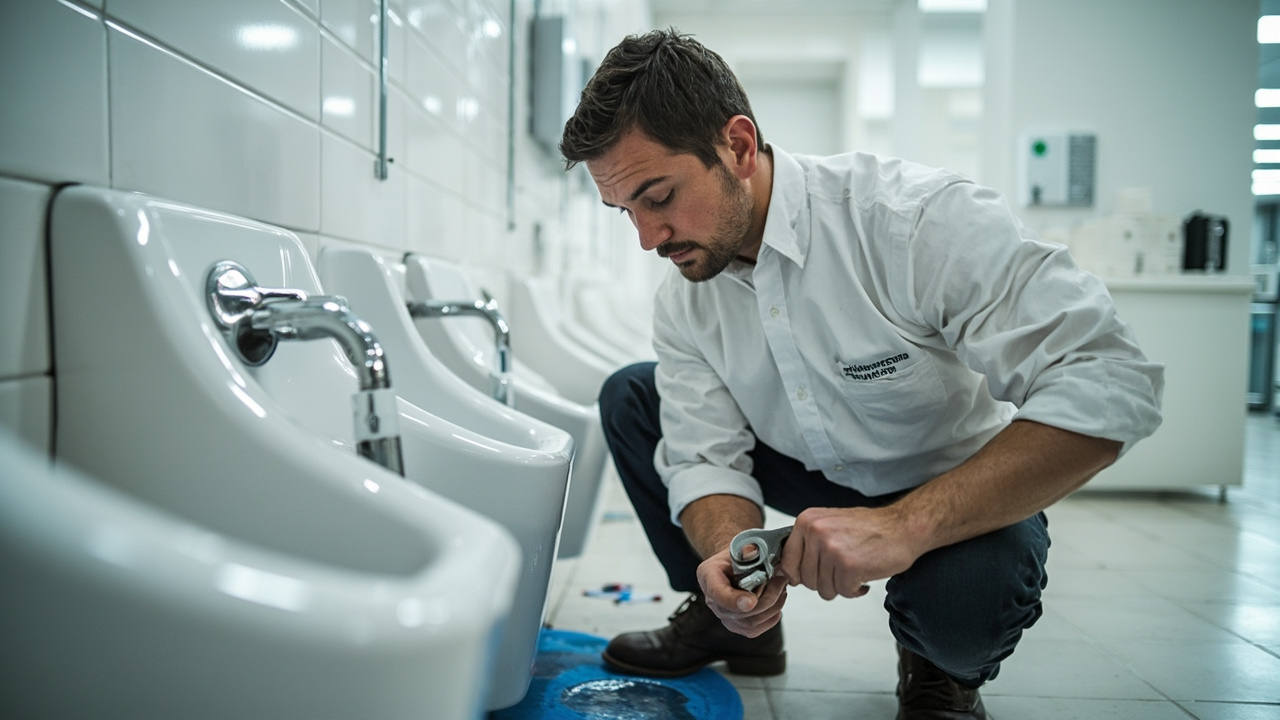
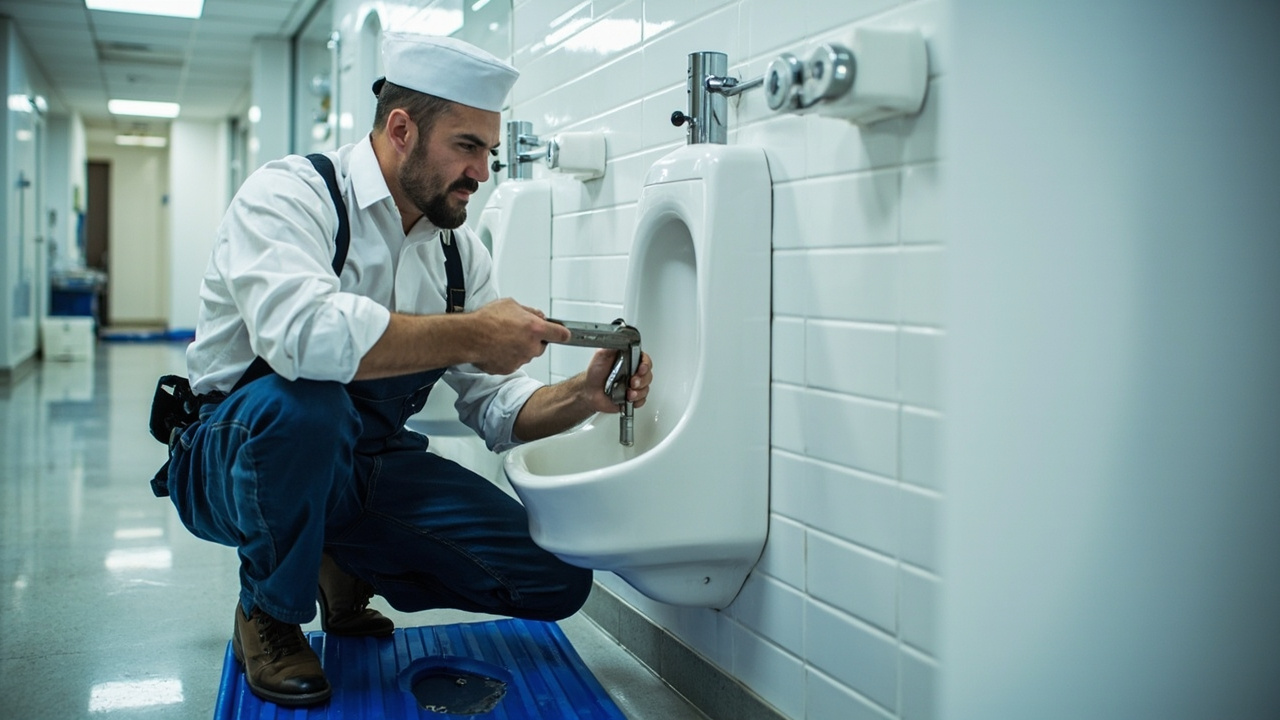
Commercial urinal maintenance includes descaling the trap, cleaning the sensor eye, testing the solenoid valve response time, and verifying proper vacuum breaker operation. These components fail differently under continuous use than they do in residential applications.

For flushometer repair, we replace the entire diaphragm assembly rather than attempting repairs on worn components. A rebuilt valve introduces failure points. Your bathroom needs parts that restore original performance specifications, not temporary fixes that fail during peak traffic periods.

We coordinate repairs around your operational schedule. If your restaurant cannot afford bathroom downtime during lunch service, we arrive at 2 PM. If your office building needs all restrooms functional by 8 AM, we schedule overnight service. Commercial flush valve replacement happens on your timeline, not ours.

Ironwood Plumbing Raleigh stocks parts for fixtures installed across Raleigh's commercial building boom from the 1980s through current construction. We repair fixtures in buildings along Fayetteville Street, facilities in the Warehouse District, and properties throughout the I-540 corridor.

What Happens During Your Service Call

Commercial Toilet & Urinal Repair in Raleigh | Same-Day Service to Keep Your Business Running
01

Immediate Fixture Assessment

Our technician identifies your fixture manufacturer, model, and current failure mode within the first five minutes on site. We test flush pressure, check supply line flow rate, and document any code compliance issues. You receive a verbal explanation of the problem before we begin repairs, including whether the issue affects other fixtures in your facility.
02

Component Replacement

We install commercial-grade replacement parts designed for your usage volume. This includes complete diaphragm assemblies for flushometers, commercial fill valves rated for high-cycle applications, and corrosion-resistant flush valve bodies. Each component meets current plumbing code requirements for water efficiency and backflow prevention. We verify proper operation under load before leaving the fixture.
03

System Verification Testing

We conduct multiple flush cycles to confirm proper bowl evacuation, verify shutoff timing on automatic sensors, and check for any leaks at connection points. You receive documentation of parts replaced, work performed, and any additional fixtures showing early wear indicators. This allows you to plan maintenance before failures occur during peak business hours.

Why Raleigh Businesses Choose Ironwood Plumbing Raleigh

Commercial restroom failures require a different response than residential service calls. You need a technician who understands North Carolina Plumbing Code requirements for commercial occupancies, stocks parts for industrial fixtures, and coordinates work around your operational constraints.

We maintain relationships with property managers throughout the Glenwood South district, office complexes along Six Forks Road, and industrial facilities near the Beltline. These managers call us because we show up with the correct parts and complete repairs during scheduled maintenance windows.

Raleigh's water contains moderate mineral content that accelerates calcium buildup in commercial flush valves. We account for this during every repair, descaling components and recommending preventive maintenance intervals based on your water chemistry and fixture usage patterns.

Our familiarity with Raleigh's commercial building stock matters. We know which fixtures were commonly installed during various construction periods, from the office towers built downtown in the 1990s to the recent mixed-use developments in North Hills. This knowledge eliminates diagnostic time and reduces the need to order obsolete parts.

When your restaurant in Cameron Village needs commercial urinal maintenance or your office building near NC State requires emergency industrial toilet repair services, we respond with the expertise your property demands. We understand that every hour of bathroom downtime affects your revenue, your reputation, and your compliance status.

The commercial facilities we service operate across industries, from medical offices requiring strict sanitation standards to manufacturing plants with heavy daily fixture usage. Each environment presents specific challenges that residential plumbing experience does not address.

What to Expect from Our Commercial Service

Response Time and Scheduling

We offer same-day service for commercial restroom failures that affect your operations. Emergency calls receive priority dispatch, with technicians typically on site within two hours during business hours. For planned maintenance and non-urgent repairs, we schedule around your operational needs, including after-hours and weekend service. You speak directly with our dispatch team, not an answering service. We provide arrival time windows and confirm appointments the day before scheduled service.

Diagnostic Process

Our evaluation goes beyond the immediate failure. We inspect water supply lines for proper pressure, check shutoff valves for functionality, examine mounting stability, and test flush performance against manufacturer specifications. For sensor-operated fixtures, we verify battery voltage, clean sensor lenses, and test activation range. You receive a complete explanation of what failed, why it failed, and whether similar failures are likely in other fixtures. This diagnostic approach prevents surprise failures across your facility.

Repair Quality Standards

We install only commercial-grade components designed for high-cycle applications. Residential parts fail quickly in commercial settings. Our repairs restore fixtures to original performance specifications, including proper flush volume, bowl evacuation, and refill timing. We verify code compliance for backflow prevention, verify proper venting, and confirm ADA compliance where applicable. Each repair receives multi-cycle testing before we leave your property. You get fixtures that perform reliably under continuous use, not temporary fixes.

Ongoing Maintenance Support

After completing repairs, we provide recommendations for preventive maintenance based on your fixture type, usage volume, and water quality. Many commercial clients benefit from scheduled maintenance agreements that address minor issues before they become failures. We maintain service records for your facility, tracking which fixtures have been serviced, what components were replaced, and when follow-up inspections are recommended. This approach reduces emergency calls and extends fixture lifespan across your property.

Frequently Asked Questions

You Have Questions,
We Have Answers

How to fix a commercial toilet that won't flush all the way? +

A commercial toilet that won't complete its flush cycle typically suffers from low water pressure, a faulty flushometer valve, or inadequate tank water levels. Check the water supply line for partial closure or debris in the vacuum breaker. Inspect the diaphragm inside the flushometer for wear or mineral buildup from Raleigh's moderately hard water. Adjust the flush volume control screw if accessible. In high-traffic Raleigh facilities, sediment from aging municipal lines can clog internal passages. If adjustments fail, the flushometer assembly or flush valve requires replacement to restore proper flow and prevent ongoing complaints from tenants or customers.

What is the most common toilet flush problem? +

The most common commercial toilet flush problem is a worn or damaged flapper valve in tank-type units, or a failed diaphragm in flushometer systems. These rubber components deteriorate from constant use and chemical exposure. In Raleigh commercial buildings, hard water mineral deposits accelerate degradation. A faulty flapper causes continuous water flow, increasing utility costs and creating liability concerns. The diaphragm controls water release timing in high-pressure systems. When it cracks or calcifies, flush cycles become weak or fail entirely. Regular inspection during preventive maintenance catches these failures before they disrupt business operations or violate plumbing code compliance.

How do you adjust the valve on a commercial toilet? +

Adjusting a commercial flushometer valve requires locating the flush volume adjustment screw on the valve body. Turn the screw clockwise to reduce water volume or counterclockwise to increase flow. Most Sloan or Zurn flushometers feature a top-mounted control stop for pressure regulation. Shut off the water supply first. Remove the valve cover and access the diaphragm assembly. Check the bypass orifice for blockages. Raleigh's water chemistry can cause mineral buildup that affects calibration. Adjust in small increments and test flush performance. Improper adjustments waste water or create code violations. Commercial settings require precise calibration to balance efficiency with reliable waste removal.

How much does it cost for a plumber to repair a toilet flange? +

Toilet flange repair costs vary based on damage severity, accessibility, and whether concrete cutting is required. Simple wax ring replacement with minor flange tightening costs less than full cast iron flange replacement in a concrete slab. Raleigh commercial properties built on clay soil may experience foundation shifting that damages flanges. Labor involves removing the toilet, assessing subfloor integrity, and ensuring proper flange height per code. Corroded bolts, rotted subflooring, or broken PVC flanges increase scope. Get detailed written estimates that specify materials and labor separately. Emergency after-hours service costs more but prevents water damage and business interruption losses that exceed repair expenses.

How to fix a toilet that won't flush but it's not clogged? +

When a toilet won't flush despite a clear drain, the issue lies in the flush mechanism itself. Check the lift chain connecting the flush handle to the flapper valve for proper tension and connection. Inspect the flapper for warping or mineral deposits preventing a seal. In commercial flushometer toilets common in Raleigh office buildings, examine the handle assembly and piston for wear. Low water pressure from building supply issues or a partially closed angle stop valve also prevents proper flushing. Test water pressure at the supply line. If internal components show corrosion or calcium buildup, replacement restores function and prevents ongoing operational disruptions.

Why put aluminum foil in a toilet tank? +

Aluminum foil in a toilet tank is a makeshift attempt to prevent mineral buildup on tank components or as a folk remedy for cleaning. This practice has no legitimate commercial application and can damage flush mechanisms. In Raleigh facilities, proper water treatment and scheduled maintenance prevent scale accumulation more effectively. Foil can tear and jam flush valves or interfere with float mechanisms. Commercial operations require reliable, code-compliant solutions. Use manufacturer-approved descaling products during maintenance intervals. If hard water causes frequent issues, install a water softener system or replace vulnerable components with mineral-resistant materials designed for commercial-grade performance and longevity.

What are two things you should never flush down a toilet? +

Never flush feminine hygiene products or paper towels down commercial toilets. These items do not break down like toilet paper and cause immediate blockages in drain lines and sewer systems. In Raleigh commercial buildings with older cast iron or clay sewer laterals, these materials create costly backups that disrupt business operations. They snag on pipe joints and tree root intrusions common in the area. Post clear signage in restrooms prohibiting these items. Provide proper disposal receptacles. Educating staff and visitors prevents emergency calls, protects your plumbing infrastructure, and avoids potential sewage backups that create health code violations and liability concerns.

What is the most common toilet repair? +

The most common commercial toilet repair involves replacing the flapper valve or flushometer diaphragm. These components endure constant mechanical stress and chemical exposure in high-traffic facilities. In Raleigh commercial properties, hard water accelerates wear on rubber seals and gaskets. A failing flapper causes continuous running water, inflating utility bills by hundreds of dollars monthly. Diaphragm failure in flushometer systems results in weak flushes or complete failure. Both repairs are straightforward for qualified technicians but require proper replacement parts matched to specific valve models. Preventive replacement during scheduled maintenance prevents emergency failures during business hours and maintains restroom functionality.

Will hydrogen peroxide dissolve toilet paper? +

Hydrogen peroxide does not effectively dissolve toilet paper and should not be used for drain clearing in commercial settings. Toilet paper is designed to break down with water agitation and time. Persistent clogs indicate a blockage deeper in the drain line requiring mechanical clearing. In Raleigh commercial facilities, tree roots infiltrating older sewer laterals often trap paper and create recurring issues. Chemical solutions rarely address the root cause and can damage pipes or create hazardous fumes. Professional augering or hydro-jetting removes obstructions safely and identifies underlying problems like bellied pipes or separated joints that require permanent repair to maintain reliable drainage.

What is a commercial toilet valve called? +

A commercial toilet valve is called a flushometer or flush valve. The most common brands in Raleigh commercial buildings are Sloan and Zurn flushometers. These pressure-assisted valves deliver high-volume water flow for efficient waste removal in high-traffic restrooms. The assembly includes a vacuum breaker, diaphragm, piston, and handle mechanism. Manual flushometers require physical activation while sensor-operated models use infrared detection for hands-free operation. The control stop valve regulates incoming water pressure. Understanding proper terminology helps communicate repair needs accurately and ensures correct replacement parts. Commercial-grade flushometers require specific maintenance protocols different from residential gravity-flush toilets to maintain code compliance and performance.

How Raleigh's Water Chemistry Affects Commercial Restroom Fixtures

Raleigh's municipal water supply contains moderate levels of calcium and magnesium that create scaling issues in commercial flush valves and sensor assemblies. High-traffic restrooms experience accelerated mineral buildup because constant water flow deposits layers of calcium on diaphragm seats, solenoid valves, and spray heads. This accumulation affects flush timing, creates phantom flushes in sensor-operated fixtures, and eventually prevents complete shutoff. Commercial properties near E. Chatham Street and facilities throughout the downtown corridor see these issues manifest faster due to higher usage volumes that compound mineral exposure.

Our experience servicing commercial properties throughout Wake County gives us specific knowledge of how local water conditions interact with different fixture types. We understand which commercial urinal models resist scaling better in Raleigh's water chemistry and which flushometer designs require more frequent maintenance. Properties we service range from the state government buildings downtown to private sector facilities in the Midtown area. This local expertise allows us to recommend maintenance intervals that match your specific environment rather than generic manufacturer guidelines.

Plumbing Services in The Raleigh Area

We are proud to serve the entire Raleigh community and surrounding areas, bringing our trusted plumbing services directly to your doorstep. You can find our main office location on the map below. We are committed to providing fast response times and expert service, no matter where you are located within our service area. If you're unsure if we service your neighborhood, simply give us a call!

Address:
Ironwood Plumbing Raleigh, 4108 Atlantic Ave, Raleigh, NC, 27604

Additional Services We Offer

Our news updates

Latest Articles & News from The Blogs

Essential Tips for Maintaining Your Garbage Disposal During the Busy Holiday Season in Cary Your garbage disposal works hard year-round…

Essential Tips for Maintaining Your Garbage Disposal During the Busy Holiday Season in Cary

Essential Tips for Maintaining Your Garbage Disposal During the Busy Holiday Season in Cary Your garbage disposal works hard year-round…

Why Your Fridge Water Filter Might Be Slowing Down the Flow to Your Ice Maker

Why Your Fridge Water Filter Might Be Slowing Down the Flow to Your Ice Maker\n\nYour fridge is running slow and…

Designing a Laundry Room for Multi-Generational Living in Your Rolesville Property

Designing a Laundry Room for Multi-Generational Living in Your Rolesville Property Multi-generational living in Rolesville means creating spaces that work…

Contact Us

Every hour your restroom stays offline costs you money and creates liability exposure. Call Ironwood Plumbing Raleigh at (984) 294-6422 right now to schedule same-day commercial toilet and urinal repair. We dispatch immediately for emergency failures.