




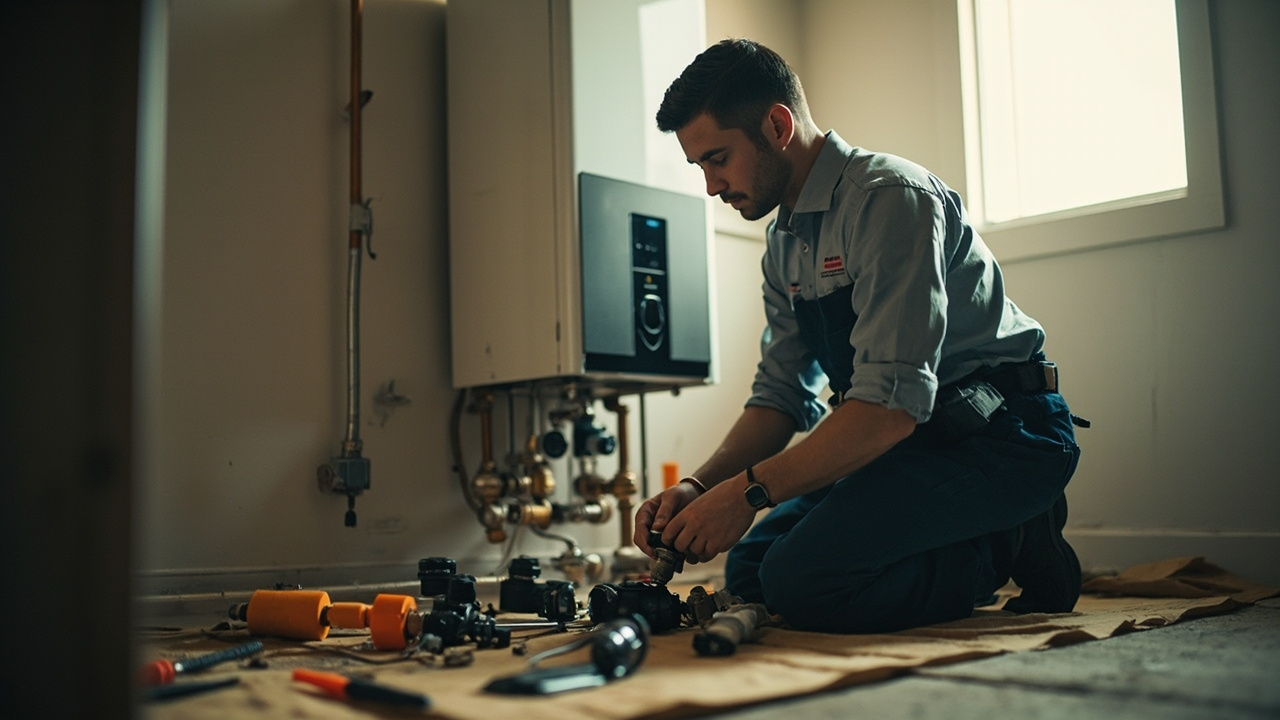
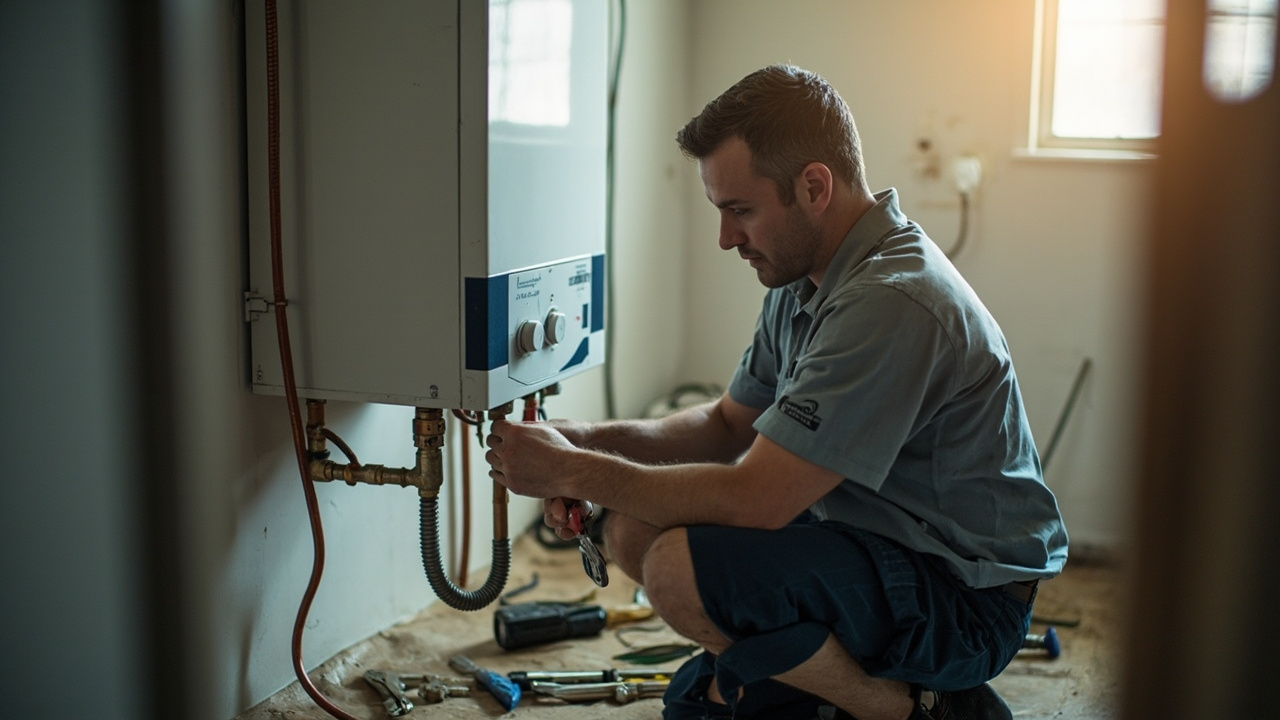
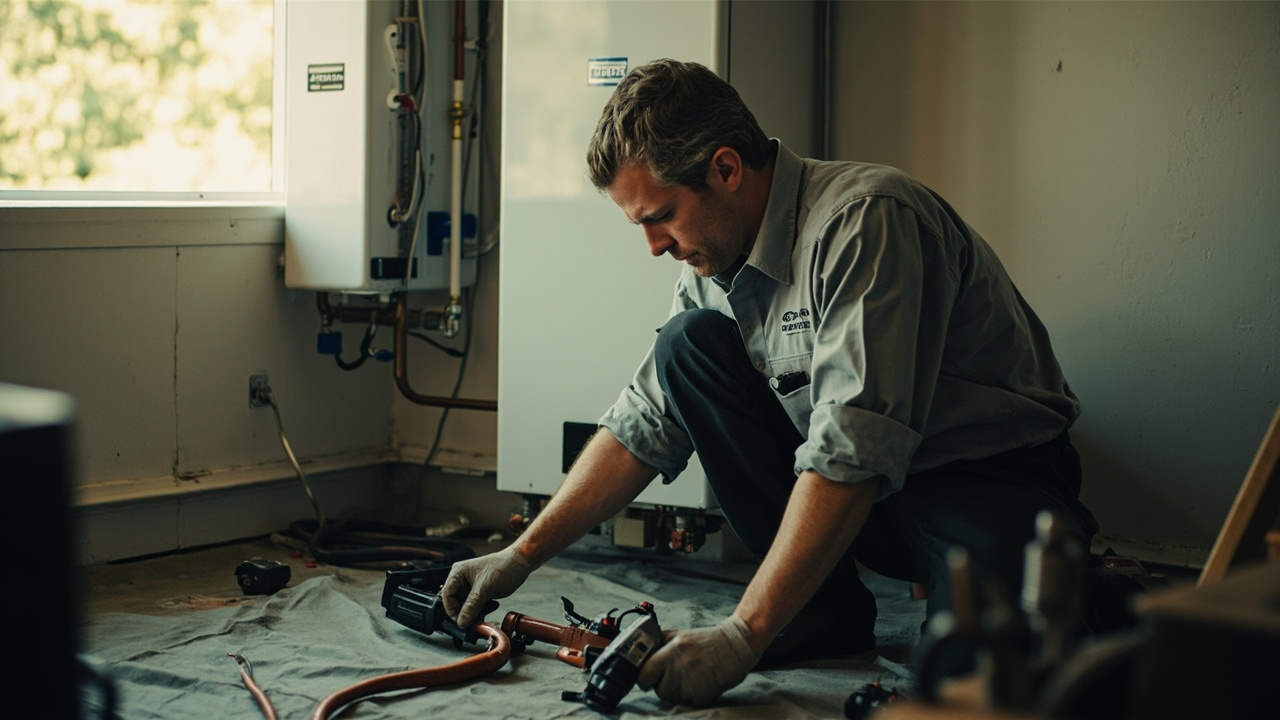
Raleigh's municipal water contains dissolved minerals that accumulate inside tankless heat exchangers faster than in traditional storage tanks. The city's water hardness ranges from 3 to 7 grains per gallon depending on which treatment plant serves your neighborhood. Homes supplied by the E.M. Johnson Water Treatment Plant near Falls Lake receive slightly different water chemistry than those served by the Dempsey E. Benton plant. When water heats rapidly inside the narrow passages of a heat exchanger, calcium carbonate precipitates and forms scale deposits. These deposits reduce heat transfer efficiency, trigger high-temperature error codes, and eventually cause component failure. Regular descaling during tankless water heater maintenance removes these deposits and prevents expensive repairs.
Choosing a plumber who understands Raleigh's plumbing infrastructure and building codes ensures your tankless installation meets local requirements and performs reliably. Wake County requires permits for gas line modifications and electrical work exceeding 20 amps. We handle permitting and coordinate inspections with the county building department. Our familiarity with Raleigh's older neighborhoods helps us anticipate challenges like undersized gas lines in pre-1980s homes or inadequate venting clearances in renovated properties. We also understand how seasonal water temperature fluctuations affect system performance and size equipment accordingly. Local expertise translates to installations that work correctly from day one and repairs that solve problems permanently.