Choosing Between Reverse Osmosis and Whole House Filtration for Your Wendell Home
Water quality affects everything from your morning coffee to the lifespan of your appliances. In Wendell, where many homes rely on well water or municipal supplies from the Neuse River Basin, understanding your filtration options is the first step toward cleaner, safer water. Reverse osmosis systems deliver ultra-pure drinking water through a dedicated faucet, while whole house filtration treats every drop entering your home. Both systems solve different problems, and the right choice depends on your specific water source, budget, and household needs.. Read more about Why Your Kitchen Faucet Has Very Low Pressure But the Rest of Your Woodcrest House is Fine.
Hard water minerals, sediment, and occasional iron staining are common in eastern Wake County. Municipal water in Wendell meets EPA standards but still contains chlorine byproducts and trace contaminants. Well water introduces variables like sulfur odors, bacteria, and fluctuating mineral content. Testing your water is non-negotiable before investing in any system. A simple analysis reveals what’s actually in your water so you can match the right technology to the problem instead of guessing. EPA drinking water standards.
How Reverse Osmosis Systems Work in Wendell Homes
Reverse osmosis forces water through a semi-permeable membrane that blocks particles larger than 0.0001 microns. This includes dissolved solids, lead, arsenic, and many organic compounds. An RO system typically includes pre-filters for sediment and chlorine, the RO membrane itself, a storage tank, and a dedicated drinking water faucet. The process wastes about 3-4 gallons for every gallon of purified water, which matters in areas with water restrictions or high municipal rates.
Installation requires drilling a hole in your sink or countertop for the faucet and running tubing to the system under the sink. Most Wendell kitchens have enough cabinet space for the 3-5 gallon storage tank. The system produces 50-75 gallons per day, enough for drinking, cooking, and filling pet bowls. Filters need replacing every 6-12 months, and the membrane lasts 2-3 years depending on water quality. Safe Gas Line Installation and Repairs for Residents in Rolesville.
Golden Nugget #1: Wendell’s municipal water from the Neuse River Basin averages 6-8 grains per gallon of hardness, which is moderate but enough to cause scale buildup in coffee makers and water heaters over time.
Whole House Filtration Systems Explained
Whole house systems treat water at the point where it enters your home, ensuring every faucet, shower, and appliance receives filtered water. The most common setup uses a large carbon filter to remove chlorine, sediment, and volatile organic compounds. Some systems add a water softener to address hardness, while others include iron filters or UV sterilization for bacteria.
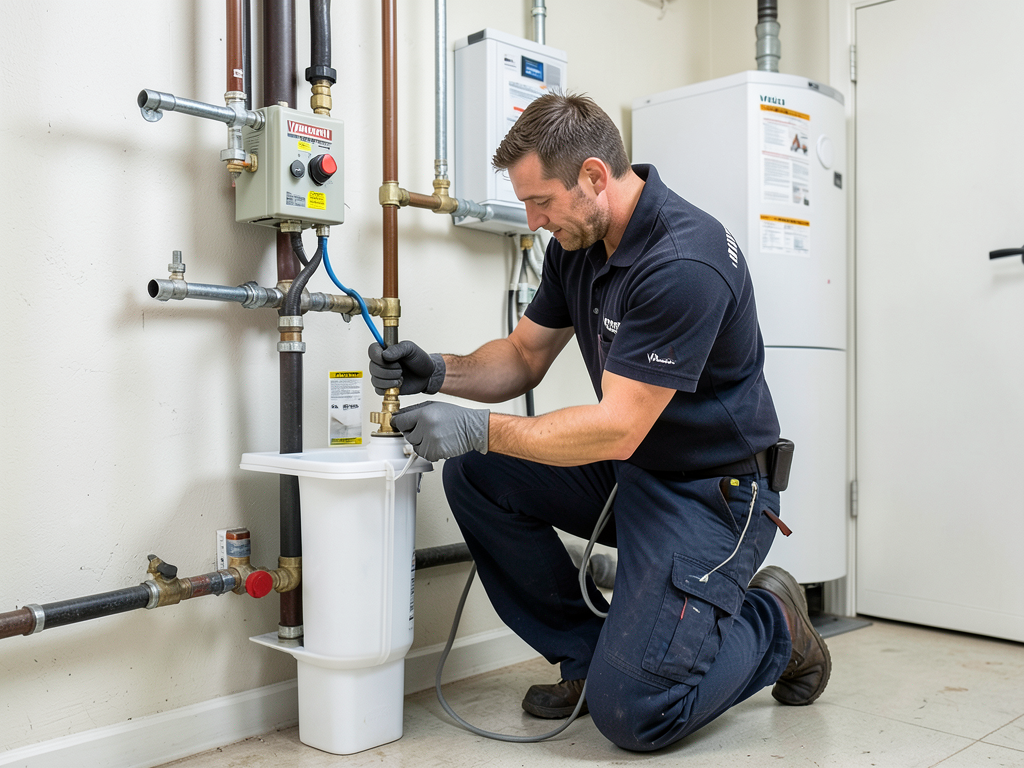
Installation requires cutting into the main water line, typically in the garage, basement, or utility closet. The system size depends on your home’s water flow rate and contaminant load. A 1-2 bathroom home might need a 10 GPM system, while larger homes require 15+ GPM capacity. The upfront cost is higher than RO, but you get filtered water everywhere without dedicated faucets or storage tanks.
Maintenance involves replacing large filter cartridges every 6-12 months and occasionally backwashing the system. Some whole house units last 10-15 years with proper care. The key advantage is convenience – you never run out of filtered water, and appliances like dishwashers and washing machines benefit from scale reduction.
Water Quality Testing: The Non-Negotiable First Step
Before choosing any system, you need to know what’s in your water. Wake County offers free basic testing for residents, but this only checks for bacteria and nitrates. A comprehensive test from a certified lab analyzes hardness, pH, iron, manganese, sulfur, total dissolved solids, and specific contaminants like lead or arsenic.
Testing takes 3-5 days and costs $150-300 depending on the panel. The results tell you exactly what you’re dealing with. High hardness and sediment? A whole house system with softener makes sense. Low TDS but concerns about drinking water purity? RO becomes the better choice. Without testing, you’re buying blind and might solve the wrong problem.. Read more about Dealing with Blue or Green Stains in Your Sinks and Tubs in Wendell Falls.
Golden Nugget #2: Well water in eastern Wake County commonly contains iron levels of 1-3 parts per million, which causes orange staining on fixtures and laundry. Standard carbon filters won’t remove iron – you need specialized media or oxidation systems.
Cost Comparison: RO vs Whole House Systems
Reverse osmosis systems cost $300-800 for the unit plus $200-400 for professional installation. Annual filter replacement runs $100-200. The total five-year cost including installation and maintenance is $1,000-1,500. You get ultra-pure drinking water but no benefit for showers, laundry, or appliances. Professional Drain Cleaning Services in Cary to Stop Stubborn Backups.
Whole house systems range from $1,500-4,000 installed, depending on size and features. A basic carbon filter system costs less than one with softener and iron removal. Annual maintenance is $200-400 for filter changes and media replacement. The five-year cost is $2,500-5,000, but you treat all water in the home.. Read more about Well Pump Repair and Replacement Services for Wake Forest Homes on Well Water.
The break-even point depends on your priorities. If you only care about drinking water quality, RO is cheaper. If you want to protect plumbing, appliances, and skin from hard water, whole house filtration provides more value despite the higher initial investment.
| System Type | Initial Cost | Installation | Annual Maintenance | 5-Year Total | Best For |
|---|---|---|---|---|---|
| Reverse Osmosis | $300-800 | $200-400 | $100-200 | $1,000-1,500 | Drinking water only |
| Whole House Basic | $1,500-2,500 | $500-800 | $150-300 | $2,500-4,000 | All water in home |
| Whole House with Softener | $2,500-4,000 | $600-1,000 | $200-400 | $3,500-6,000 | Hard water areas |
Installation Considerations for Wendell Homes
Wendell homes built before 2000 often have galvanized steel pipes that corrode from the inside out. Installing a whole house system on old plumbing can reveal existing problems – suddenly, you’ll notice discolored water from taps that were previously masked by the untreated supply. Always inspect your plumbing before installation.
Space is another factor. RO systems fit under kitchen sinks in most Wendell homes. Whole house units need 2-3 feet of floor space and 6-8 feet of height clearance. Utility rooms, garages, and basements work best. If you have a crawl space, the installation becomes more complex and may require weatherproof housing. Apartment Complex Plumbing.
Permitting requirements vary. Wake County requires permits for whole house systems that modify the main water line. RO installations under sinks typically don’t need permits. Your plumber should handle permits and inspections as part of the installation process. Who to Call for 24-7 Plumber Services in Wake Forest.
Maintenance Requirements and Lifespan
RO systems need filter changes every 6-12 months depending on usage and water quality. The membrane lasts 2-3 years. You’ll notice reduced water flow when filters clog. Most systems have indicator lights or pressure gauges to signal when maintenance is due.
Whole house systems have different maintenance schedules. Carbon filters last 6-12 months, while water softener resin lasts 10-15 years. Iron filters may need media replacement every 3-5 years. UV lamps require annual replacement. The larger the system, the less frequent the maintenance, but individual tasks take longer.
Neglecting maintenance reduces effectiveness and can damage your plumbing. Hard water scaling builds up faster without proper softener function. Bacteria can grow in carbon filters if not replaced on schedule. Professional maintenance contracts cost $150-300 annually but ensure your system runs optimally.
Environmental Impact and Water Conservation
RO systems waste water – typically 3-4 gallons rejected for every gallon purified. In Wendell, where water conservation matters during drought periods, this waste adds up. Some newer systems recover 50% of wastewater, but they cost more. If you have a septic system, the reject water goes to your drain field.
Whole house systems don’t waste water during normal operation. Water softeners use salt for regeneration, which creates brine discharge. Modern high-efficiency softeners use 50% less salt and water than older models. The environmental impact depends on your specific system and local water conditions.
Consider your household’s water usage patterns. A family of four using 300 gallons daily might waste 900-1,200 gallons monthly with an RO system. That’s 10,000-15,000 gallons annually – enough to fill a small swimming pool. Whole house filtration eliminates this waste but may increase your salt usage.
Common Water Issues in Wendell and Solutions
Wendell’s water challenges vary by source. Municipal water from the Neuse River contains chlorine for disinfection, which creates byproducts like trihalomethanes. These affect taste and may have long-term health implications. Well water introduces different problems – iron staining, sulfur odors, and bacterial contamination are common in eastern Wake County.
Chlorine removal is straightforward with carbon filtration. Iron requires oxidation followed by filtration. Sulfur smells need specialized media or aeration. Bacteria demand UV sterilization or chlorination. Each problem needs a specific solution – there’s no one-size-fits-all filter.. Read more about Getting Rid of That Rotten Egg Smell Coming from the Drains in Your Willow Spring Home.
Golden Nugget #3: The North Carolina Department of Environmental Quality reports that 15% of private wells in Wake County test positive for total coliform bacteria, indicating potential contamination from surface water or septic systems.
Professional Installation vs. DIY
RO systems are DIY-friendly if you’re comfortable with basic plumbing. Installation takes 2-4 hours and requires drilling a hole for the faucet. The risk is minimal – wrong connections cause leaks, but you can shut off water and fix mistakes. Professional installation costs $200-400 but includes proper mounting, leak testing, and warranty validation.
Whole house systems demand professional installation. Cutting into the main water line requires permits and code compliance. Incorrect installation can cause backflow contamination, pressure issues, or code violations. A licensed plumber ensures proper sizing, installation, and integration with your existing plumbing.
DIY installation voids most manufacturer warranties. Professional installation typically includes a one-year labor warranty plus the manufacturer’s equipment warranty. The peace of mind and code compliance justify the cost for whole house systems.
Making Your Decision: Key Questions to Ask
Start with water testing. Without knowing what’s in your water, you can’t choose the right system. Next, consider your priorities. Do you only care about drinking water? Are you trying to protect appliances from scale? Do you have skin sensitivity to chlorine?
Budget matters, but don’t let initial cost override long-term value. A cheap system that doesn’t solve your problem wastes money. Consider maintenance costs, replacement schedules, and energy usage. Some systems require electricity for pumps or UV lamps, adding to operating costs.
Think about your home’s future. Planning to stay 5+ years? Invest in the system that solves your problems. Selling soon? A whole house system can be a selling point for buyers concerned about water quality.
Frequently Asked Questions
Does my Wendell home need a water filtration system?
If you notice scale buildup on faucets, chlorine taste in drinking water, or staining on fixtures, you likely need filtration. Testing confirms what specific contaminants are present and which system will solve them.
How long does installation take?
RO installation takes 2-4 hours. Whole house system installation requires 4-8 hours plus any necessary plumbing modifications. Complex installations may take two days if permits or inspections are required.
Will a filtration system affect my water pressure?
Properly sized systems maintain your existing pressure. Undersized units can reduce flow, especially during peak usage. A professional assessment ensures your system matches your home’s water demand.
Next Steps for Cleaner Water
Water quality testing is your first step toward making an informed decision. Without testing, you’re guessing about your water’s composition and potentially investing in the wrong solution. A comprehensive analysis reveals exactly what you’re dealing with and guides your system selection.
Professional installation ensures your system works correctly from day one. Improper installation can cause leaks, pressure problems, or code violations that cost more to fix than professional installation would have cost initially.
Call (984) 294-6422 today to schedule your water quality test and consultation. Our Wendell plumbing experts will analyze your water, assess your home’s needs, and recommend the right filtration solution. Don’t guess about your water quality – know exactly what’s in it and choose the system that solves your specific problems.
Clean, safe water isn’t a luxury – it’s essential for your family’s health and your home’s longevity. Take the first step now by calling (984) 294-6422. We’ll help you choose between reverse osmosis and whole house filtration based on your actual water quality, not assumptions. For more information, visit North Carolina water quality information.
{
“@context”: “https://schema.org”,
“@type”: “BlogPosting”,
“headline”: “Choosing Between Reverse Osmosis and Whole House Filtration for Your Wendell Home”,
“description”: “Discover the differences between RO and whole house systems for Wendell’s water quality. Learn which filtration fits your home’s needs from local plumbing experts.”,
“wordCount”: 2006,
“datePublished”: “2026-03-07T09:02:00.000Z”,
“dateModified”: “2026-03-07T09:02:00.000Z”,
“inLanguage”: “en-US”,
“mainEntityOfPage”: {
“@type”: “WebPage”,
“@id”: “https://ironwoodplumbingraleigh.com”
},
“publisher”: {
“@type”: “LocalBusiness”,
“name”: “Ironwood Plumbing Raleigh”,
“url”: “https://ironwoodplumbingraleigh.com”
},
“author”: {
“@type”: “Organization”,
“name”: “Ironwood Plumbing Raleigh”,
“url”: “https://ironwoodplumbingraleigh.com”
},
“image”: {
“@type”: “ImageObject”,
“url”: “https://ironwoodplumbingraleigh.com/wp-content/uploads/2026/03/choosing-between-reverse-osmosis-and-whole-house-f-1.png”
}
}
{
“@context”: “https://schema.org”,
“@type”: “Plumber”,
“name”: “Ironwood Plumbing Raleigh”,
“url”: “https://ironwoodplumbingraleigh.com”,
“address”: {
“@type”: “PostalAddress”,
“addressLocality”: “Raleigh”
},
“areaServed”: {
“@type”: “City”,
“name”: “Raleigh”
}
}
{
“@context”: “https://schema.org”,
“@type”: “FAQPage”,
“mainEntity”: [
{
“@type”: “Question”,
“name”: “Does my Wendell home need a water filtration system?”,
“acceptedAnswer”: {
“@type”: “Answer”,
“text”: “If you notice scale buildup on faucets, chlorine taste in drinking water, or staining on fixtures, you likely need filtration. Testing confirms what specific contaminants are present and which system will solve them.”
}
},
{
“@type”: “Question”,
“name”: “How long does installation take?”,
“acceptedAnswer”: {
“@type”: “Answer”,
“text”: “RO installation takes 2-4 hours. Whole house system installation requires 4-8 hours plus any necessary plumbing modifications. Complex installations may take two days if permits or inspections are required.”
}
},
{
“@type”: “Question”,
“name”: “Will a filtration system affect my water pressure?”,
“acceptedAnswer”: {
“@type”: “Answer”,
“text”: “Properly sized systems maintain your existing pressure. Undersized units can reduce flow, especially during peak usage. A professional assessment ensures your system matches your home’s water demand.”
}
}
]
}
{
“@context”: “https://schema.org”,
“@type”: “BreadcrumbList”,
“itemListElement”: [
{
“@type”: “ListItem”,
“position”: 1,
“name”: “Home”,
“item”: “https://ironwoodplumbingraleigh.com”
},
{
“@type”: “ListItem”,
“position”: 2,
“name”: “Blog”,
“item”: “https://ironwoodplumbingraleigh.com/blog”
},
{
“@type”: “ListItem”,
“position”: 3,
“name”: “Choosing Between Reverse Osmosis and Whole House Filtration for Your Wendell Home”
}
]
}
{
“@context”: “https://schema.org”,
“@type”: “Service”,
“serviceType”: “Plumbing”,
“provider”: {
“@type”: “LocalBusiness”,
“name”: “Ironwood Plumbing Raleigh”,
“url”: “https://ironwoodplumbingraleigh.com”
},
“areaServed”: {
“@type”: “City”,
“name”: “Raleigh”
},
“description”: “Discover the differences between RO and whole house systems for Wendell’s water quality. Learn which filtration fits your home’s needs from local plumbing experts.”
}