Why Your Toilets Keep Backing Up in Your 5401 North New Construction Home
Your brand-new toilet backing up feels like a nightmare. You just moved in. Everything should work perfectly. But here you are watching water rise instead of flush. This happens more than you think in Raleigh’s new construction neighborhoods. Construction debris clogs pipes. Soil settling creates pipe bellies. And sometimes builders miss test plugs entirely.
Let’s diagnose what’s happening under your 5401 North home right now and what you can do about it. North Carolina Home Warranty Information.
Construction Debris: The Hidden Clog Culprit
New construction sites generate surprising amounts of debris that ends up in drain lines. Drywall mud hardens like concrete inside pipes. Tile spacers slip down vents. Wood blocks from framing fall through gaps. Even workers’ tools occasionally get dropped and forgotten. Professional Drain Cleaning Services in Cary to Stop Stubborn Backups.
Once construction debris hardens, it catches toilet paper and waste. Your low-flow toilet can’t generate enough pressure to push through these blockages. The problem gets worse over time as more material accumulates.. Read more about The Best Low-Flow Toilets That Actually Flush Properly for Your Holly Springs Home.
Common debris found in new construction lines:
- Drywall joint compound (sets rock-hard)
- Tile spacers and broken tile pieces
- Wood blocks and sawdust
- Plastic packaging materials
- Construction worker tools (yes, really)
North Carolina Plumbing Code requires builders to flush new lines before occupancy. But enforcement varies. Many builders skip this step or do it improperly.
Pipe Bellies: When Your Soil Shifts
North Carolina red clay expands and contracts with moisture changes. During construction, heavy equipment compacts soil unevenly. Builders backfill around pipes, but settling continues for months after you move in.
A pipe belly forms when a section of drain pipe sags below grade. Water and waste collect in these low spots instead of flowing freely. Over time, the belly fills completely and blocks everything.
Signs of a pipe belly in your 5401 North home:
- Toilet gurgles before backing up
- Multiple fixtures clog simultaneously
- Backups occur after heavy rain
- Problem worsens over several weeks
Bellies commonly form near cleanouts, at pipe joints, or where lateral lines connect to the main sewer. The settling process takes 6-12 months in new developments. Signs You Need Sewer Repair.
Missing Test Plugs: The Builder’s Oversight
During construction, plumbers install test plugs to pressure-test drain lines. These plastic or rubber plugs prevent water from escaping during inspection. They should remove all plugs before final inspection. Who to Call for 24-7 Plumber Services in Wake Forest.
Sometimes plugs remain in place. They sit just beyond your toilet flange, completely blocking flow. You flush. Nothing happens. Water rises. The fix? Simple removal. The cause? Builder error.
North Carolina Plumbing Code Section 312.6 requires removal of all test plugs before final inspection. But some builders skip this step to save time.
Low-Flow Toilet Pressure Issues
Your 5401 North home likely has 1.28 GPF toilets. These water-efficient models save thousands of gallons annually. But they have less flushing power than older 3.5 GPF toilets.
Low-flow toilets need clear, properly sloped pipes to work correctly. Any restriction reduces their effectiveness. Construction debris, pipe bellies, or offset joints create just enough resistance to cause backups.
Modern toilets also have smaller trapways. While they prevent clogs from large objects, they’re more sensitive to partial blockages. What would barely affect an older toilet stops a new one completely.
Raleigh Soil and Grading Challenges
The Piedmont region’s clay soil presents unique plumbing challenges. Clay retains moisture, expanding when wet and contracting when dry. This movement shifts underground pipes over time. Finding Underground Leaks in Five Points Without Digging Up Your Entire Yard.
5401 North sits in an area where developers often encounter pockets of dense clay mixed with sandy soil. This inconsistent composition causes uneven settling. Pipes laid in sandy areas settle faster than those in clay pockets.
Heavy construction equipment during your home’s building phase compacted soil beyond normal levels. This compaction creates stress points where pipes bend or offset slightly. These minor imperfections become major problems with low-flow toilets.
Warranty vs. Professional Repair: Making the Right Call
Your builder’s one-year warranty covers workmanship defects. This includes construction debris, missing test plugs, and pipe bellies caused by improper installation. Safe Gas Line Installation and Repairs for Residents in Rolesville.
But warranty repairs require documentation. You need to prove the problem existed when you moved in, not from something you caused.
When to call your builder:
- Multiple toilets backing up simultaneously
- Backups occur within first 30 days of occupancy
- You see visible construction debris in cleanout
- Problem affects all bathrooms, not just one
When to call a professional plumber:
- Single toilet problem in isolated bathroom
- Backups occur after you’ve lived there months
- You’ve already used chemical drain cleaners
- Problem worsens gradually over time
Call (984) 294-6422 today to schedule your inspection if you’re unsure which category fits your situation.
Diagnostic Checklist: Finding Your Problem
Before calling anyone, run through this diagnostic checklist. It helps you understand the problem and communicate clearly with service providers.
- Check All Fixtures
Flush every toilet in your home. Run water in all sinks and tubs. If only one toilet backs up, the problem is likely isolated to that bathroom’s plumbing.. Read more about Why Your Apex Basement Bathroom Needs a Special Sewage Ejector Pump.
- Listen for Gurgling
Pay attention to sounds when flushing. Gurgling indicates air trapped in pipes, often a sign of partial blockage or improper venting.
- Check Cleanout Access
Locate your main cleanout (usually near the front of the house). Remove the cap carefully. If you see standing water or debris, the main line is affected.
- Monitor Water Levels
After a backup, wait 30 minutes. If water slowly drains away, you have a partial blockage. If it stays backed up, the blockage is complete.. Read more about Dealing with Dry Floor Drains and Sewer Smells in Your Cameron Village Basement.
- Consider Recent Events
Did the problem start after heavy rain? After you used chemical cleaners? After construction crews worked nearby? Recent events often trigger underlying issues.
Professional Solutions for New Construction Backups
Professional plumbers use specific tools for new construction problems. The approach depends on your diagnosis.
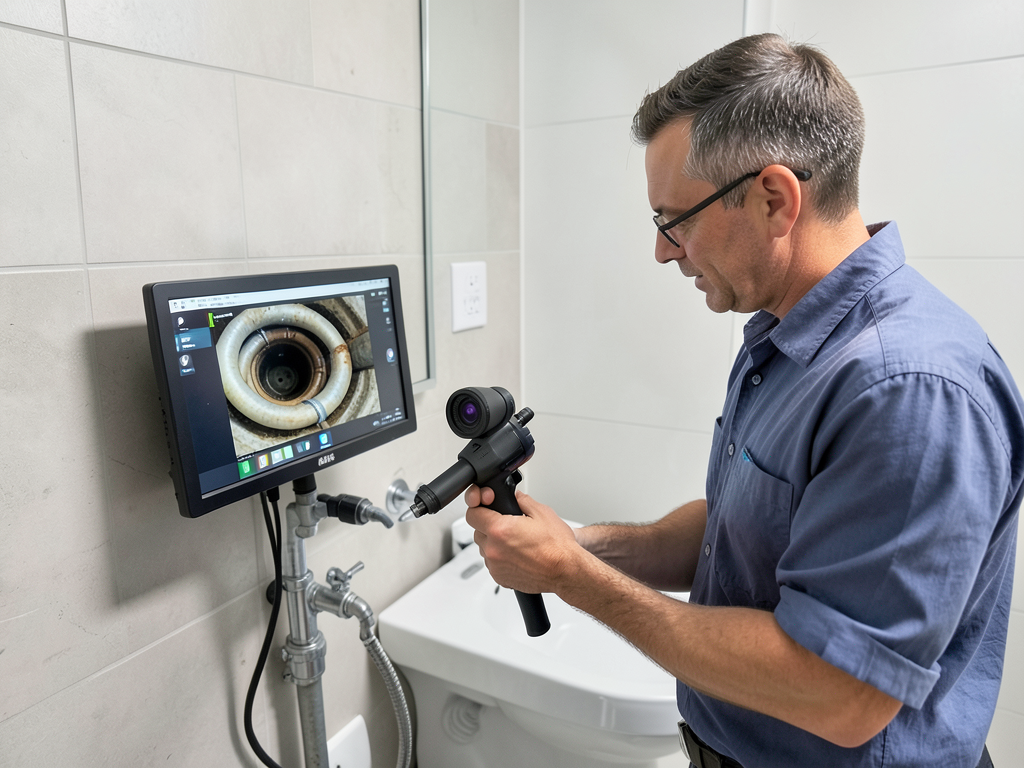
Sewer Camera Inspection – A waterproof camera travels through your drain lines, showing exactly what’s causing the backup. This service costs $250-400 in Wake County and provides definitive answers.
Hydro-Jetting – High-pressure water (up to 4000 PSI) blasts away construction debris, grease, and mineral buildup. Unlike drain snakes, hydro-jetting cleans the entire pipe diameter.
Pipe Realignment – For pipe bellies, plumbers can sometimes adjust pipe supports to restore proper slope. This avoids expensive excavation in many cases.
Test Plug Removal – Simple but effective. Plumbers locate and remove any remaining test plugs, instantly restoring flow.
Most new construction toilet backups resolve within 2-4 hours once properly diagnosed.
Preventing Future Backups
After fixing your current problem, take steps to prevent future backups in your 5401 North home.
Proper Flushing Habits – Only flush toilet paper and human waste. “Flushable” wipes don’t break down like toilet paper. They accumulate in pipes and cause stubborn clogs.
Regular Maintenance – Schedule professional drain cleaning every 18-24 months. This prevents debris buildup before it causes problems.
Monitor Water Usage – Multiple simultaneous flushes strain your plumbing system. Space out high-volume water usage when possible.
Address Small Issues Promptly – Slow drains indicate developing problems. Fix them before they become full backups.
City of Raleigh and Builder Responsibilities
The City of Raleigh Public Utilities Department oversees new construction sewer connections. They require builders to submit inspection reports and obtain permits before occupancy. City of Raleigh Public Utilities Construction Permits.
But city inspectors don’t catch every problem. They verify code compliance, not necessarily functionality. A pipe might meet code requirements but still cause backups due to settling or debris.
North Carolina law requires builders to correct defects from faulty workmanship within one year. This covers most construction-related plumbing issues. But you must notify them in writing and give them reasonable time to respond.
Keep records of all communications with your builder. Document problems with photos and videos. This documentation proves invaluable if disputes arise.
Cost Considerations for 5401 North Homeowners
Understanding potential costs helps you budget and make informed decisions.
| Service | Typical Cost Range | Notes |
|---|---|---|
| Sewer Camera Inspection | $250-400 | Definitive diagnosis tool |
| Hydro-Jetting | $400-600 | Cleans entire pipe system |
| Basic Snaking | $150-250 | Removes simple clogs |
| Test Plug Removal | $100-150 | Quick fix if applicable |
| Emergency Service | $350-500 | After-hours calls |
Many plumbing companies offer free estimates for new construction homeowners. This allows you to understand the problem before committing to repairs.
Frequently Asked Questions
Why would a brand-new toilet back up?
New construction toilets back up due to construction debris in pipes, missing test plugs, pipe bellies from soil settling, or improper installation. These issues exist from day one but may not cause problems immediately.
Is my builder responsible for toilet backups?
Your builder is responsible if the backup results from construction debris, missing test plugs, or installation errors within the one-year warranty period. You must notify them in writing and allow reasonable time for repairs.
How can I tell if the problem is in the main line or just one toilet?
If only one toilet backs up while others work fine, the problem is likely isolated to that bathroom’s plumbing. If multiple fixtures clog simultaneously, the main sewer line probably has an issue.
Should I use chemical drain cleaners on new pipes?
Avoid chemical drain cleaners on new pipes. They can damage PVC and corrode metal components. They also create heat that may warp pipes. Use mechanical methods or call a professional instead.
How long does it take to fix a toilet backup in new construction?
Most toilet backup repairs take 2-4 hours once properly diagnosed. Camera inspections take 30-60 minutes. Simple clogs clear in under an hour. Complex issues like pipe bellies may require multiple visits.
Take Action Before Your Next Backup
Watching your toilet back up in a brand-new home feels frustrating and confusing. But you have options. Understanding the cause helps you choose the right solution.
If you’re in the 5401 North area and experiencing toilet backups, don’t wait for the problem to worsen. Construction debris won’t dissolve on its own. Pipe bellies will only get worse with time.
Call (984) 294-6422 today to schedule your inspection. Our experienced technicians diagnose new construction plumbing issues quickly and accurately. We’ll identify whether you’re dealing with construction debris, pipe bellies, or something else entirely.
Don’t let a preventable plumbing issue ruin your new home experience. Pick up the phone and call (984) 294-6422 before the next storm hits or the next flush fails. Your new construction home should work perfectly from day one, and we’ll help make that happen.
You may also find this helpful. How the Massive Willow Oaks in Anderson Heights Might Be Damaging Your Sewer Line.
{
“@context”: “https://schema.org”,
“@type”: “BlogPosting”,
“headline”: “Why Your Toilets Keep Backing Up in Your 5401 North New Construction Home”,
“description”: “Discover why new construction toilets in Raleigh back up and what to do about it. Learn about construction debris, pipe bellies, and warranty coverage for 5401 North homes.”,
“wordCount”: 1756,
“datePublished”: “2026-04-10T06:03:00.000Z”,
“dateModified”: “2026-04-10T06:03:00.000Z”,
“inLanguage”: “en-US”,
“mainEntityOfPage”: {
“@type”: “WebPage”,
“@id”: “https://ironwoodplumbingraleigh.com”
},
“publisher”: {
“@type”: “LocalBusiness”,
“name”: “Ironwood Plumbing Raleigh”,
“url”: “https://ironwoodplumbingraleigh.com”
},
“author”: {
“@type”: “Organization”,
“name”: “Ironwood Plumbing Raleigh”,
“url”: “https://ironwoodplumbingraleigh.com”
},
“image”: {
“@type”: “ImageObject”,
“url”: “https://ironwoodplumbingraleigh.com/wp-content/uploads/2026/03/why-your-toilets-keep-backing-up-in-your-5401-nort-1.png”
}
}
{
“@context”: “https://schema.org”,
“@type”: “Plumber”,
“name”: “Ironwood Plumbing Raleigh”,
“url”: “https://ironwoodplumbingraleigh.com”,
“address”: {
“@type”: “PostalAddress”,
“addressLocality”: “Raleigh”
},
“areaServed”: {
“@type”: “City”,
“name”: “Raleigh”
}
}
{
“@context”: “https://schema.org”,
“@type”: “FAQPage”,
“mainEntity”: [
{
“@type”: “Question”,
“name”: “Why would a brand-new toilet back up?”,
“acceptedAnswer”: {
“@type”: “Answer”,
“text”: “New construction toilets back up due to construction debris in pipes, missing test plugs, pipe bellies from soil settling, or improper installation. These issues exist from day one but may not cause problems immediately.”
}
},
{
“@type”: “Question”,
“name”: “Is my builder responsible for toilet backups?”,
“acceptedAnswer”: {
“@type”: “Answer”,
“text”: “Your builder is responsible if the backup results from construction debris, missing test plugs, or installation errors within the one-year warranty period. You must notify them in writing and allow reasonable time for repairs.”
}
},
{
“@type”: “Question”,
“name”: “How can I tell if the problem is in the main line or just one toilet?”,
“acceptedAnswer”: {
“@type”: “Answer”,
“text”: “If only one toilet backs up while others work fine, the problem is likely isolated to that bathroom’s plumbing. If multiple fixtures clog simultaneously, the main sewer line probably has an issue.”
}
},
{
“@type”: “Question”,
“name”: “Should I use chemical drain cleaners on new pipes?”,
“acceptedAnswer”: {
“@type”: “Answer”,
“text”: “Avoid chemical drain cleaners on new pipes. They can damage PVC and corrode metal components. They also create heat that may warp pipes. Use mechanical methods or call a professional instead.”
}
},
{
“@type”: “Question”,
“name”: “How long does it take to fix a toilet backup in new construction?”,
“acceptedAnswer”: {
“@type”: “Answer”,
“text”: “Most toilet backup repairs take 2-4 hours once properly diagnosed. Camera inspections take 30-60 minutes. Simple clogs clear in under an hour. Complex issues like pipe bellies may require multiple visits.”
}
}
]
}
{
“@context”: “https://schema.org”,
“@type”: “HowTo”,
“name”: “How to Diagnose Toilet Backup”,
“step”: [
{
“@type”: “HowToStep”,
“position”: 1,
“name”: “Check All Fixtures”,
“text”: “Flush every toilet in your home. Run water in all sinks and tubs. If only one toilet backs up, the problem is likely isolated to that bathroom’s plumbing.”
},
{
“@type”: “HowToStep”,
“position”: 2,
“name”: “Listen for Gurgling”,
“text”: “Pay attention to sounds when flushing. Gurgling indicates air trapped in pipes, often a sign of partial blockage or improper venting.”
},
{
“@type”: “HowToStep”,
“position”: 3,
“name”: “Check Cleanout Access”,
“text”: “Locate your main cleanout (usually near the front of the house). Remove the cap carefully. If you see standing water or debris, the main line is affected.”
},
{
“@type”: “HowToStep”,
“position”: 4,
“name”: “Monitor Water Levels”,
“text”: “After a backup, wait 30 minutes. If water slowly drains away, you have a partial blockage. If it stays backed up, the blockage is complete.”
},
{
“@type”: “HowToStep”,
“position”: 5,
“name”: “Consider Recent Events”,
“text”: “Did the problem start after heavy rain? After you used chemical cleaners? After construction crews worked nearby? Recent events often trigger underlying issues.”
}
],
“image”: “https://ironwoodplumbingraleigh.com/wp-content/uploads/2026/03/why-your-toilets-keep-backing-up-in-your-5401-nort-1.png”
}
{
“@context”: “https://schema.org”,
“@type”: “BreadcrumbList”,
“itemListElement”: [
{
“@type”: “ListItem”,
“position”: 1,
“name”: “Home”,
“item”: “https://ironwoodplumbingraleigh.com”
},
{
“@type”: “ListItem”,
“position”: 2,
“name”: “Blog”,
“item”: “https://ironwoodplumbingraleigh.com/blog”
},
{
“@type”: “ListItem”,
“position”: 3,
“name”: “Why Your Toilets Keep Backing Up in Your 5401 North New Construction Home”
}
]
}
{
“@context”: “https://schema.org”,
“@type”: “Service”,
“serviceType”: “Plumbing”,
“provider”: {
“@type”: “LocalBusiness”,
“name”: “Ironwood Plumbing Raleigh”,
“url”: “https://ironwoodplumbingraleigh.com”
},
“areaServed”: {
“@type”: “City”,
“name”: “Raleigh”
},
“description”: “Discover why new construction toilets in Raleigh back up and what to do about it. Learn about construction debris, pipe bellies, and warranty coverage for 5401 North homes.”
}